
What Your First Float Is Actually Like (Yes, Even If You're Claustrophobic)
So you've heard about floating. Maybe a friend won't stop talking about it, or you saw the cabin and felt equal parts curious and unsure.
And then a small voice showed up: what if I don't like being closed in?
That hesitation is the most common thing we hear at Flow Spa in Peterborough, and it's completely reasonable. The good news is that a float almost never feels the way people imagine it will.
Here's an honest walkthrough of what your first float therapy session is actually like, from the moment you arrive to how you'll feel walking out.
First, What Float Therapy Actually Is
Float therapy, sometimes called floatation therapy or sensory deprivation, is simple: you lie back in a shallow pool of water saturated with about a thousand pounds of Epsom salt. That much salt makes you buoyant, so you float on the surface with zero effort.
No treading, no holding yourself up, nothing to do.
The water is kept at skin temperature, the room is quiet or with soft spa music playing, and the light is soft or off. With less input coming at your senses, your nervous system finally gets a chance to downshift. Many people find this is where the mental clarity, deep relaxation, and problem-solving benefits come from.
You can read more about how it works on our about floating page.
The "I'm Claustrophobic" Question
Let's tackle the big one, because it's the reason a lot of people wait longer than they need to.
The float cabins we have are not a sealed pod. At Flow Spa, you are always in control of your environment.
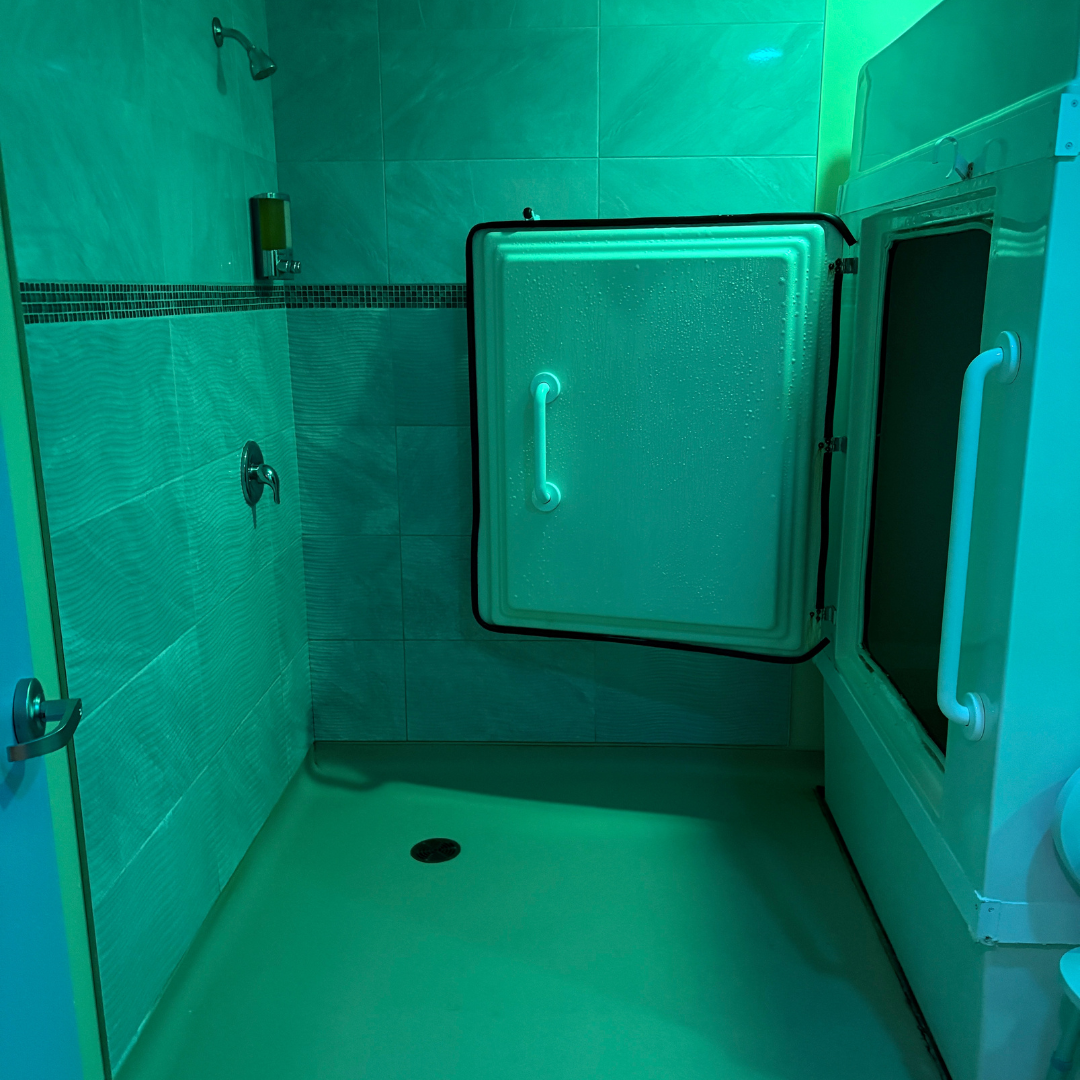
That means:
The door closes gently and is always accessible to open. You can open it whenever you want, and many first-timers leave it open the entire session.
The light stays on if you want it on. Darkness is optional, not required.
You have tons of space. Our float rooms feel more like a private spa suite than a capsule.
You can sit up, stretch, or step out anytime. Nothing about a float is locked, timed, or forced.
Here's the part that surprises people: because the water holds you completely and there's nothing pressing in on you, most people who call themselves claustrophobic feel more open and spacious in the tank, not less. You're floating in warm, weightless quiet. That sensation tends to override the closed in worry within the first few minutes.
Walking Through Your First Session, Step by Step
Knowing the sequence takes a lot of the mystery out of it.
Here's how a first float typically goes.
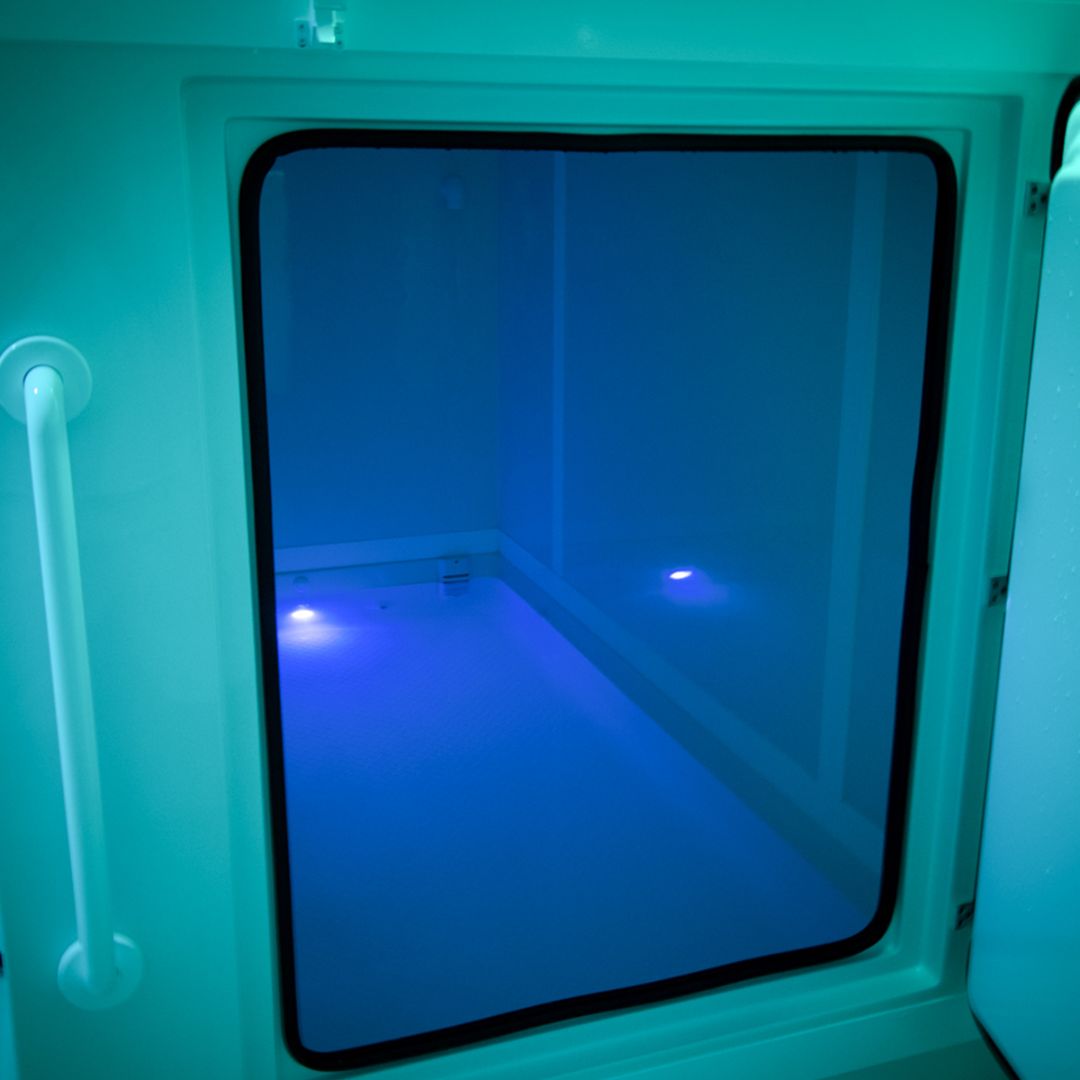
1. You Arrive and Settle In
You'll get a quick, friendly orientation. We'll show you your private room, explain how everything works, and answer any questions. There's no rush. If you're nervous, that’s alright and you can let us know. We do this all day and we're happy to walk you through it. This isn’t anything like skydiving or getting a tattoo. It’s a perfectly calm and relaxing environment.
2. You Shower Before You Float
A quick pre-float shower rinses off oils and products so the water stays clean. It also signals to your body that you're transitioning into rest mode.
3. You Get In and Let Go
You'll step into the shallow water, lie back, and let the salt do the work. This is the moment most people brace for and then immediately relax, because floating really is effortless. We provide a small neck support halo if you want one, and a little petroleum jelly for any tiny cuts, since Epsom salt can sting them briefly.
4. The First Few Minutes
Your mind might be busy at first. That's normal. You may fidget, notice your breathing, or wonder if you're "doing it right." There's no wrong way to float. Within five to ten minutes, most people feel their shoulders drop and their thoughts start to slow down.
5. The Middle Stretch
This is where floating gets interesting. Some people drift toward a half-asleep, dreamy state. Others get a burst of clear thinking and creative problem-solving. Some simply enjoy the deepest rest they've had in weeks. Where you land often changes from session to session and gets deeper over time.
6. The Session Gently Ends
Soft music or light usually signals that your time is wrapping up. You'll shower again to rinse off the salt, get dressed, and ease back into the world. We keep water and a calm space nearby so you can transition slowly.
How You Might Feel Afterward
Everyone's a little different, but common first-float reactions include:
A pleasant, slightly floaty calm, like the feeling after a long massage
Looser shoulders, neck, and lower back from the Epsom salt and zero gravity
A quieter mind and easier focus for the rest of the day
Better sleep that night
Some people feel a big shift the first time. For others, it builds over a few sessions as the novelty wears off and the body learns to let go faster. Both are completely normal.
Tips to Make Your First Float Easier
A few small things go a long way for first-timers:
Don't float on a full stomach or ravenous. A light snack an hour before or meal timing as usual is ideal.
Skip caffeine beforehand if you can. It's easier to settle when you're not wired.
Go in with no agenda. You don't have to reach some perfect meditative state. Resting counts.
Leave the light on and door open if that helps. You can always adjust once you feel comfortable.
Give yourself a buffer afterward. Try not to rush straight into something stressful.
Float therapy is a practical tool for people who want to think more clearly and actually rest to ease pain and stress. Recovery isn't always supposed to be productive. Sometimes the most productive thing you can do is truly rest.
We Get A Lot Of The Same Questions, All The Time
Let’s Answer Some Of Them Here
Do I have to close the door or turn off the lights?
No. You're in full control the entire time. Many first-timers at our Peterborough spa keep the light on and the door open for their whole session, and that's completely fine.
What if I'm claustrophobic?
Most people who worry about this end up feeling surprisingly open and calm in the float cabin, since the water holds you and nothing presses in. You can keep the space bright and open, and you can step out anytime. It feels like stepping into a room, rather than being in a confined space.
How long is a float session?
A standard float runs about 60 minutes. First-timers sometimes wonder if that will feel too long, but the time usually passes faster than expected once you settle in.
Will I fall asleep, and is that okay?
You might, and that's perfectly safe. The salt keeps you afloat, so you can't roll over or go under. Drifting off is a sign your body needed the rest.
What do I need to bring?
Just yourself. We provide towels, showers, and everything you need on site. Contact lenses come out before you float, so bring a case if you wear them.
Can I combine floating with other recovery?
Absolutely. Floating pairs beautifully with our infrared sauna or Normatec compression for a fuller reset. Check our pricing page to see what fits your day.
Ready for Your First Float?
The hardest part of floating is booking the first one. Once you're in the water, it tends to make a lot more sense than any explanation can.
If you're in Peterborough and curious, we'd love to guide you through it. Book your first float at Flow Spa and come find your flow.
Need help finding the right time that works for you, or looking to book for multiple guests at once? Or give us a call at 705-230-8575, and we’ll be happy to help!