I’ve done hundreds of cold plunges, but after a few months away from having it as a consistent part of my recovery practice, I felt like it was time to get back into it. So when Andrew Huberman’s new book, Protocols, introduced a new approach to cold plunges built for stress resilience instead of muscle recovery, I decided to test it out on myself.
This protocol pairs really well with our newest membership option that grants you unlimited access to our facilities; more on that down below.
Treat Deliberate Cold Exposure As Resilience Training
We see a lot of our clients coming in to use the cold plunge and contrast therapy setup as athletes or for “sports recovery” benefits; the cold reduces soreness, and contrasting that with the hot tub or sauna creates a really nice circulation boost. When this approach is taken, we typically recommend aiming for 10-11 total minutes per week in the cold water, taking as many rounds as is necessary, because that is what’s been studied the most as an effective time for recovery.
However, the Huberman protocol on what he likes to call “deliberate cold exposure” is meant for what many of us would see as an unexpected benefit.
Getting yourself in cold water is challenging. Even if you like the feeling of challenging yourself, your body still feels the shock of the cold as a spike in adrenaline. Our heart rate increases and breathing gets sharper and faster. This short bout of stress to our system is actually healthy when it doesn’t push us over the edge of an already burnt-out state. By inoculating ourselves to acute stressors like a cold plunge for a couple of minutes, other stressors in our daily lives land a bit softer.
The deliberate challenge of a cold plunge entrains the body to be ready to handle more stress.
Don’t Chase The Clock, Break Through Walls
What makes this deliberate cold exposure protocol different from our usual recommendations for cold plunging is the idea is to “break through walls” instead of setting a timer and counting down to zero.
This concept was new to me for cold plunges, but it makes a lot of sense.
If your goal with getting in the cold water is to become more stress-resilient, you shouldn’t always just race the clock to when time is up, because stress doesn’t hit us that predictably.
So instead, ride each wave, or break through each wall of adrenaline as it comes to you. If you’ve ever done a cold plunge before, you’ll recognize what this means intuitively. Some moments feel harder and make you want to jump out, but it will subside if you stick through it. Our nervous system spikes adrenaline to alert us to the cold water we are immersed in, and your body wants you to get out. The first couple of these walls to break through come almost instantly, then they space out more and become less predictable. How hot or cold you already are, whether you slept well or not, what other stress you’ve got going on, the temperature of the cold water, and more, all can affect when these walls to break through come. The practice shifts from chasing the clock to pushing through somewhere between 4-10 of these walls, which usually hits in 1-3 minutes total for a session. If you are doing this 3-5 times a week, you are building up resilience to stress and also going to reach the optimal number for total weekly time that we typically recommend.
My One-Week Experiment
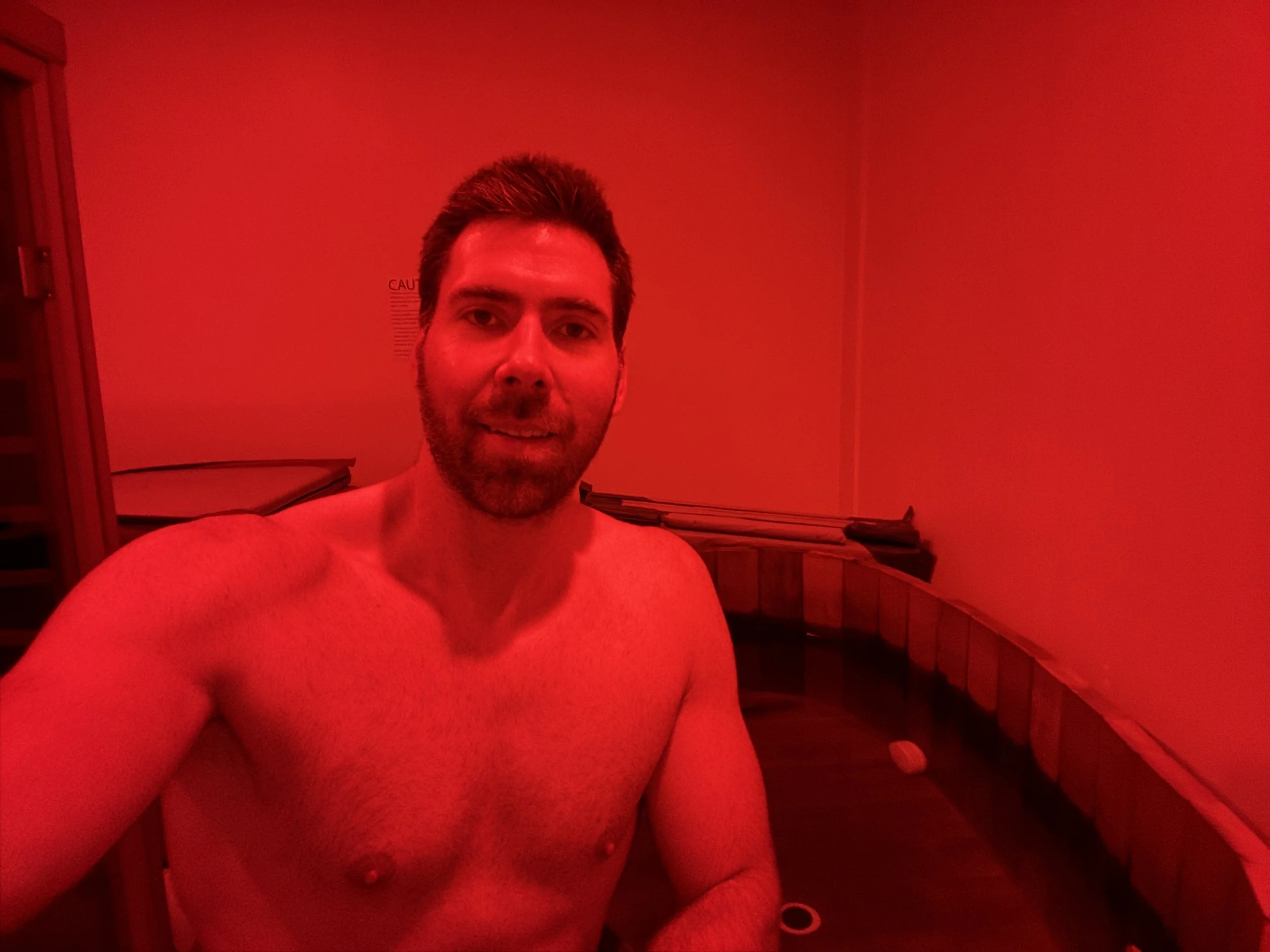
I haven’t been consistent in cold plunging lately, so I challenged myself to test out this protocol to better report on what you can expect. The first day is always the hardest. I’ve done hundreds of cold plunges in the past and am pretty good at turning my brain off to the aversion of getting in the cold water. But dipping back in after a break is still hard. I decided to just go for about 5-6 walls on day 1, which took about 90 seconds. I also made the water cold, but not extreme, so it was around 15°C.
Over the past week, I’ve gradually increased this each day or every other day, so I did about 4 total cold plunges, and each one I was able to go a little bit longer and push through more walls.
But even still, there were days when it felt more challenging, like when I didn’t sleep quite as well, and so getting in the zone to attack those walls was tougher, or as I gradually dropped the temperature a few more degrees and the challenge became noticeably harder.
We are incredibly adaptable to cold water, though. Each time you do a cold plunge, you will find it a little bit easier to do. I think that even within just a few weeks of approaching deliberate cold exposure in this way, you will have set yourself up to be more resilient to other stressors when they hit.
Cold plunging is great for alertness. Even though I did find it harder to get in the cold water when I hadn’t slept the best, it did a good job of waking me up each and every time, even when sleep-deprived. I did a cold plunge in the morning, just a few hours after waking up, and I found I had a very productive morning and whole day afterwards each time.
Before You Try It
Cold plunges are a shock to the system, so before starting a deliberate cold exposure practice, you should check with your doctor if you have a heart condition, high blood pressure, or are pregnant.
We also suggest starting warmer and on the shorter end of the wall count to break through. And if you’re training for strength or building muscle, try to avoid doing cold plunges for about 4 hours after hitting the gym, or at least warm back up with a hot shower, hot tub, or sauna before carrying on with your day.
Try It For Yourself With Our Newest Membership
Our Unlimited Access Membership makes it easy to challenge yourself for the next month to build greater resilience with deliberate cold exposure. For $150 for the month, you can come in every day if you want to sauna and cold plunge.
One of the reasons I think that this is a great time to test out deliberate cold exposure for yourself as a way to boost stress resilience is that the timing is right heading into the final push of the year with fall and winter; you can fit this into an affordable resilience training plan for yourself for the next month.
Get access to the Unlimited Membership here. Start right into the deliberate cold exposure protocol, or make use of the flexibility of the membership to reduce your stress levels first with a couple of float sessions and a relaxing sauna without the cold plunge.