
Lion's Mane Mushroom for Mindfulness?
This article was originally published on RJKAYSER.com in February 2018.
Since Flow Spa now has Four Sigmatic mushroom coffee and elixirs available, I thought it would be a good time to re-share this popular blog post.
This article was originally published on RJKAYSER.com in February 2018.
Since Flow Spa now has Four Sigmatic mushroom coffee and elixirs available, it ‘s a good time to re-share this popular blog post.
People search far and wide to get the "Limitless effect" from a bevvy of supplements and drugs until they are stacked on top of each other like your grandfather's daily pill planner.
Nootropics, substances that can enhance your cognition, have likely been experimented with since the dawn of mankind and is a hypothesis for why humans evolved cognitively past other animals. 20th-century science and beyond has added extra “go” to the nootropic substances of ancient days and kicked up the stimulus that newer drugs provide to the different neural pathways.
Maybe the answer is not to look towards futuristic nootropics that crank the dial up to 11 on your brain and have you buzzing but to look back to the roots of mankind to the fun guy (pun intended) that has been hypothesized to have helped develop the cognition of humans in the first place: mushrooms.
I’ve been very interested in the functional food effects of mushrooms for a long time because I freakin’ love cooking with mushrooms for one thing and you can’t get through an episode of the Tim Ferriss podcast without his sponsor ad for Four Sigmatic’s Mushroom Coffee espousing that it’s the closest thing to the Limitless effect. Being lit up like a Christmas tree sounds too good to be true and the mixed reviews for the product had me waiting on the neutral ground.
Once I saw a few more highly positive comments on one of the main ingredients, Lion’s Mane mushroom, from nutrition experts that I trust the word of, I figured I would give it a go and order the product from Four Sigmatic.
A LITTLE DAB’LL DO YA
I figured that the small 50 mg dose of caffeine in the mushroom coffee packets wouldn’t be a major factor in affecting a change in my state, as I regularly drink coffee in the morning.
My first test of the mushroom coffee came on a day when I would need to maximize the use of my afternoon to get more writing done leftover from the deep work that I do in the morning.
As I settled into my afternoon of writing and other work, I turned the kettle on and watched the water boil as I carefully read the instructions on how much water I should add to the instant coffee. It’s been many years since the last time I’ve had instant coffee because it usually tastes like someone mixed the dregs of a french pressed coffee with water and then served it to you; very watered down and weak. I didn’t want to add too much water and ruin this experience.
The instructions call for mixing the packet with 8 oz of water but I like to have a bigger cuppa to sip on so I added just a little bit more water.
After allowing it to cool so that I didn’t scald my tongue and be forced to wait 24 hours before my taste buds returned, I inhaled the aroma and took my first sip and it was surprisingly good!
It wasn’t very bitter and was earthy and chocolatey and somewhat more soothing than the usual jolt of java. Taste-wise at least, this was something I could get behind.
I then sat down to work and blasted through four uninterrupted hours of focused work.
Now, I know that anecdotal evidence is weak but self-experimentation is usually the first step to unlocking greater realizations in what helps each of us to perform optimally.
It could have been the extra bump in caffeine, which I usually skip for my afternoon work or maybe it was placebo. Even though I was sceptical about the effects of this mushroom coffee based on the reviews, I was hopeful that it would work well and that could very well be enough to get it working.
I also know that many writers talk about how the ritual of a hot cup of coffee is enough to get the creative juices flowing.
There are a lot more reasons for why it wouldn’t be the purported nootropic effects of the mushrooms per se but I digress.
However you take it, this was my first step down the toadstool lane.
CONFOUNDING FACTORS
I’m not one for the isolated bubble of self-experimentation and truth be told, I usually take on a few new daily tasks or “experiments” at a time making it truly impossible to correctly correlate any effects. Some of the following changes coincide with my Lion’s Mane experiment.
Meditation
My re-engagement with meditation might be the biggest factor that is playing into how I feel and the positive effects that might rightly be attributed to it and less to the Lion’s Mane.
As I described in my introduction to the Mindful Musings [at the start of 2018], I’ve set out on a goal to meditate for 20 minutes per day for 100 days straight. As of writing this, I’m now over a quarter of the way to that goal. From my past experience with extended stretches of consistent meditation, I know that it works well for helping me to better control stress and anxiety. I’m able to recognize when my thoughts are spiralling out of control and I’m able to return to a calm state with a few focused breaths.
Meditation truly is the closest thing to magical superpowers that we humans have control over.
In the past, I lost connection to meditation as I would do it first thing in the morning and discovered it wasn’t working well for me, as I would wake up earlier and earlier to fit meditation into my schedule, but what happened was I would spend most of the session dozing off and struggling to stay awake. It had lost its effectiveness in this way. Now I meditate mid-day before lunch to reset myself and enter the afternoon in a refreshed state. It’s like taking a mid-day nap but even better.
Maybe it is the meditation, although I haven’t made it back to being as proficient a meditator yet as I have been. For this 100-day challenge, I’ve been using the Muse headband to retrain myself as a meditator and so I know that I’m still not back to where I was in being so calm with my meditation. Typically only about 50% of my time meditating is spent in a calm state, whereas when I was most consistent previously, I would be around 70-80% in a calm state on average. It will be interesting to see what happens as I meditate more, but for now, I’ve still got work to do.
Writing it Down
Writing down goals, tasks to do, and a planned schedule primes your brain to focus and act on things that are conducive to achieving your goals. Many top performers in all walks of life talk about this in many different ways as priming, productivity, systems thinking, and affirmations. Whatever you want to call it, writing it down equals getting it done. I’ve found a system of planning that works really well for me and it involves a lot of writing and reviewing schedules and goals. Perhaps the writing itself is priming me for greater creativity and focus on work and reviewing it keeping me on track as well.
LION’S MANE MUSHROOM SCIENCE
Lion’s Mane mushroom is the most common name for the fungus Hericium erinaceus. It gets its name from the look of it, which resembles the mane of a lion. Some people have also suggested it looks like a human brain and suggest there is some sort of connection there other than merely coincident. While that may be a stretch, it is still very bizarre looking and fascinating.
The primary interest in Lion’s Mane for nootropic effects is due to the support for its ability to produce Nerve Growth Factor (NGF) and thereby create a neurogenesis effect. This means that Lion’s Mane can support the development of nerve cells and synaptic connections between nerve cells in the brain.
The support for these incredible effects includes demonstrations of enhancing memory and recall, as well as focus and attention. It will be great progress in science and nutrition if we can start to see more adults with cognitive decline or students facing attention difficulties in school use natural nootropics like Lion’s Mane instead of harmful drugs.
Studied dosages range from 500 - 3000 mg per day. Most bulk Lion’s Mane mushroom extract products recommend a teaspoon amount per day which equates to 2000 mg.
Lion’s Mane isn’t even a one-trick pony though. While most people are drawing their attention towards the potential brain-boosting effects of the ‘shroom, it also has the potential to treat digestive ailments. Lion’s Mane extract contains ß-glucans, a type of prebiotic fibre that can nourish beneficial bacteria to promote gut health; furthermore, extracts have been shown to have anti-bacterial and anti-inflammatory effects that can also help to treat sensitive stomachs and fight off pathogens.
BACK TO THE JOURNEY
It’s been 8 days now and I feel like my creativity has been jacked to a whole new level. A large part of it seems to be an enhancement in memory. While meditating, working, and dreaming I’ve been having tons of vivid memories about things I haven’t thought of in years, if at all since I originally experienced those moments.
On the subject of dreams for a minute; I’ve been recalling my dreams with incredible detail every night since starting the daily Lion’s Mane routine. I’ve always thought the idea of writing down dreams to enhance your ability to recall them, and maybe someday experience lucidity whilst dreaming was cool yet I always failed to catch my dreams drifting away like smoke as I awaken and try to write them down.
Like having a word stuck on the tip of your tongue, you can almost visualize what happened in the dream you just had, but putting the words to paper is futile.
In the past 8 nights, I have recalled and written down the details of no less than 17 dreams that I remember vividly in that time. This has been the coolest effect that I see as somehow different from what I get out of meditation and priming through writing. I also seem to be waking up before my alarm and fired up and ready to get started for the day, which is also nice.
The other thing I have noticed that may be more the effect of meditation is a deeper level of introspection and focus on physical things which has allowed me to have some really great flow while training several times in the past week. I can see how this could have a potential benefit on enhancing technique during training.
Being able to maintain a higher level of present-state awareness and creativity is an incredible feeling, whether you use mindfulness or some sort of brain-boosting supplement to help you achieve it. Self-experimentation can be thrilling but should be approached rationally to avoid any dramatic shifts in cognition that may be unsettling. I will be sure to continue to provide updates as my meditation journey continues and as the dream train keeps rolling on with the help of Lion’s Mane mushroom.
Have you tried Lion's Mane or any other nootropic before? Leave a comment below and let me know what works best for you.
Four Sigmatic products are now available at Flow Spa. If you’re interested in trying a sample, let us know.

Setting Lofty Goals While Making Sustainable Changes
Whether you're part of big business, a small, locally-owned business, or an individual setting and striving for your resolutions, the threshold of passing from one year to the next sparks a lot of latent energy for most people.
Businesses often use the start of the new year to look forward to setting lofty goals, although the year often cycles around the financial calendar and need not be based on January 1. It's in the sustainable little changes that we see our greatest goals accomplished.
Colleen Hunt gets into this on the FlowCast this week. With her business partner at Naturally Nested, she has lofty goals for her young business but is focussed on what she can do at the macro scale to keep moving forward.
She first had a vision for what the future held for herself and her business last year when she dreamed up the idea to hold an exhibition where people could go to meet the business owners providing different wellness opportunities in the city, supporting not only her own business but the whole health and wellness community in Peterborough. Step by step, Colleen gathered the sponsors and support of other businesses to make it happen at the start of March of this year for the inaugural Peterborough Wellness Expo.
The bigger goals and the steps to get there will be unclear to you in the beginning. It takes practice and experience to figure out how you're going to accomplish what you've dreamed up. But the more that you can look at what sustainable changes you can make right now, the better you'll be at doing things that stick long-term.
As Colleen says, picture it like this: if you look at making the smallest, sustainable change once per week, you can build up many new habits over the course of the year but it will feel vastly different than the overwhelm of trying to do it all at once.
52 new changes or habits essentially makes you a new person in a year.
It's the same when looking to be 1% better. Strive to be just one percent better each day or each week and you'll 100% different before you know it.
We all envision this perfect future life and the simplest way of achieving the perfect future life is to start with a perfect day, and then a perfect week, a perfect month, and so on.
To get to the perfect day you just have to start by making your day 1% better.
So get in the routine of reflecting on your day before you go to sleep and ask yourself how you can be 1% better tomorrow?
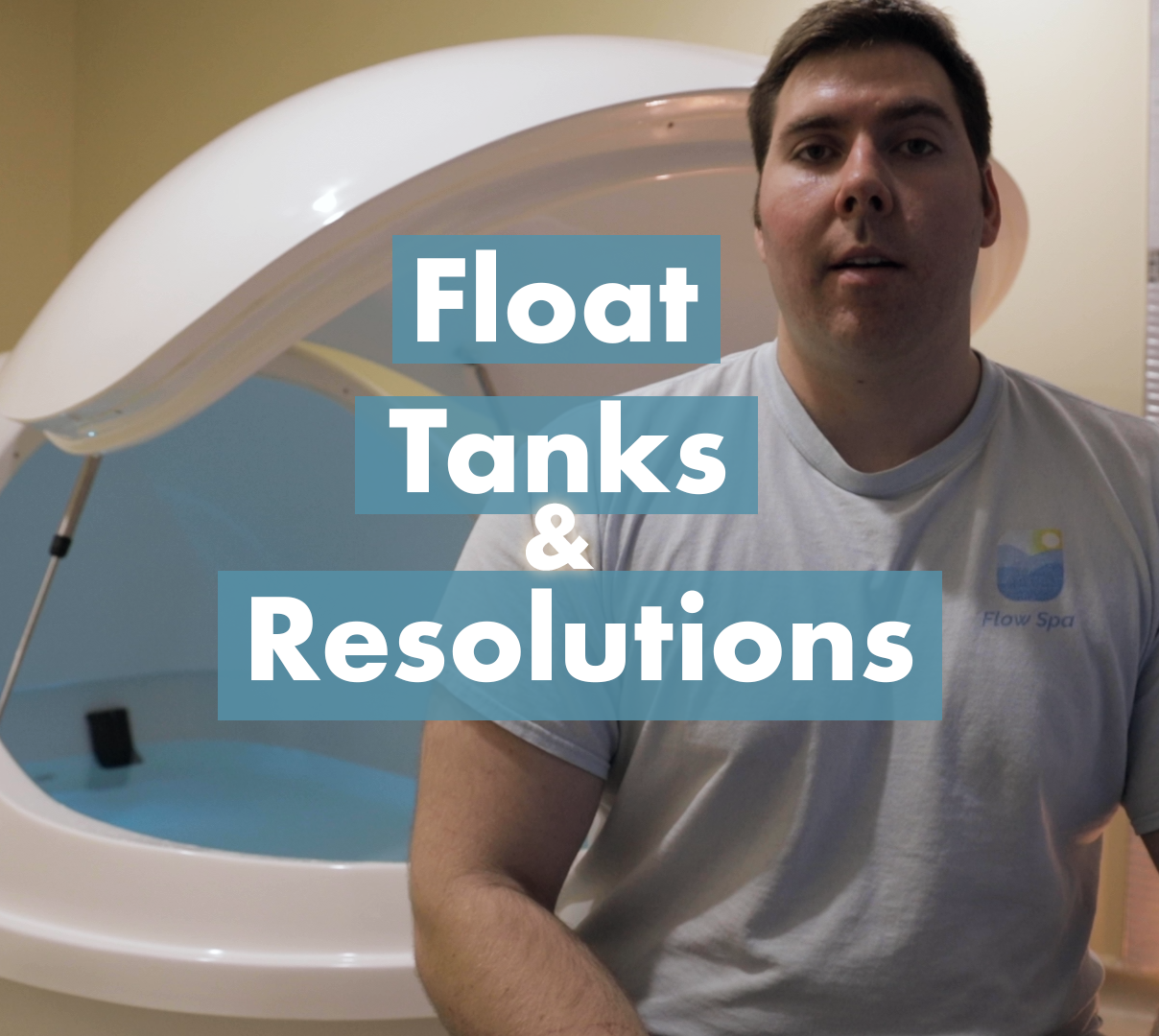
How To Achieve Your New Years' Resolutions with Floating
We know it seems inevitable the most New Year's resolutions fail. The resolutionists that fill the gym in the month of January are known to be out of the door within four weeks, statistically speaking.
The problem with resolutions, as well-intentioned, as they may be, is that there's not a plan in place to go along with them.
Including float therapy as part of the plan for a new you in 2020 can help to support your vision and accomplish your resolutions.
It's no surprise that most New Year's resolutions fail. The gym-goers and crash dieters who make resolutions in January are usually throwing in the towel within four weeks.
The issue with resolutions as well-intentioned as they may be is that they lack a plan. We often set goals and resolutions to break old habits and create new ones. But when we're stressed or busy, we often revert to our old habits instead of rising to the challenge.
Adding float therapy to your plan for a new you in 2023 can help you achieve your resolutions.
Here are 6 ways floating can help you to accomplish your New Years’ Resolutions.
Exercise and Recovery
Hitting the gym more is a popular resolution for many people but the problem that most of us face is dropping off from our goal too soon to see any real results.
Floating is one of the best sports recovery methods ever. The effects of floating effortlessly improve circulation and helps to remove the lactic acid that builds up from working out. The decompression on your back and muscles is also great if you're feeling sore or pushed yourself a little too hard with your workout.
The 1,000 lb. of Epsom salt in the float tank solution is also an athlete's dream, Magnesium is an important mineral for muscle function and Epsom salt soaks have been used by athletes for centuries to aid in recovery.
You may find yourself getting sore a lot at the start of your new adventures at the gym. Try to find the right balance so that you're not hurting too much to keep going to the gym on your planned schedule.
Weight Loss Support
This benefit of floating will be important to you if your New Years’ goal is to lose weight.
Getting control of your hormones through healthy choices is going to make a big difference in your weight loss. Cortisol is affected by our stress levels and when we're stressed all the time, cortisol remains elevated. This can lead to higher blood sugar levels and more fat being stored instead of burned.
Floating helps to drastically lower cortisol levels, supporting a healthier hormone balance in our bodies and improving our ability to burn fat, instead of storing it.
De-Stress
Maybe your resolution is to simply stress less this year and floating definitely helps with that. Floating is one of the most powerful treatments for reducing the stress hormone cortisol but the de-stressing effects don't stop there.
The physical relief of pain and the alleviation of anxiety also help to make a big difference in our stress levels, leaving you in a blissful state of relaxation.
Before you burnout, this New Year, consider floating away your stress. We find that most customers see the best de-stressing results when floating with one of our memberships every two weeks or monthly.
Addiction Support
Reducing your stress levels is also one of the most effective ways to prevent relapse when quitting smoking, drugs, or alcohol.
Researchers have effectively used float therapy as an anti-smoking intervention and the same efforts can be applied to supporting the recovery from other vices. The reduction in stress and anxiety can make a big difference in reducing cravings.
More Sleep
Most of our New Years’ Resolutions include resolving to do more.
More exercise.
More weight loss.
Making more money.
More, more, more.
And when we strive to do more, our bodies need the support and rejuvenation of more sleep. Floating relaxes the brain to the slower theta brainwave state that we also experience in REM sleep. This is one of the reasons why everyone likes floating for feeling refreshed and reinvigorated like you just came out of a great nap. Some people do indeed sleep during their float while others get this deep relaxation that allows them to then sleep better at night.
Meditation
Practicing mindfulness has become a recent resolution for a lot of people and floating is the best training wheel support for your meditation goals that you can find.
When you are floating, your brain and body can't help but get into the same state as experienced meditators do. The theta brainwave state used to be only accessible to monks and unconsciously while we are in REM sleep but float therapy has opened up this realm of relaxation to everyone.
Because the float tanks have audio in them, a float session can also be coupled with a guided meditation to teach you how to meditate while in a relaxed state.
Maybe you resolved to float more this year, but for all your other goals, the many benefits of floating can help you better achieve them.
Book a float session today to help you with your New Years’ Resolutions.

Challenge Yourself Regularly
Humans are driven forward by a condition of never being satisfied.
It's how we evolved and learned how to thrive and progressively grow as a species.
Challenging ourselves regularly is the only way to remain satisfied long-term.
Stagnation breeds complacency.
Humans are driven forward by a condition of never being satisfied.
It's how we evolved and learned how to thrive and progressively grow as a species.
Challenging ourselves regularly is the only way to remain satisfied long-term.
Stagnation breeds complacency.
I saw a shirt recently with a bold statement printed on it: "Give me progress or give me death."
My friends Josh and Dan epitomize this need to always push forward with progress.
They've created an awesome trail run community event in Peterborough that's taking place next Saturday, November 30.
Listen to this week's episode of The FlowCast to learn more about the event and sign up for "The Runs" at: https://theruns.itsyourrace.com/register/?fbclid=IwAR3M3u9feq6u6-EfymyOSq73yp8mapQjC36jN_5QZbiTwpHRA2zdkhCqmOQ

The Human Will Is Incredible
Sometimes social media gets us stuck in a loop of feeling that our lives are not as exciting or interesting as the lives of the people we are connected to but if you look closer, you will find inspiration in those posts, tweets, and TikToks.
I saw an example of a friend who had made an incredible change from a bleak situation into a hopeful future recently and it got me thinking…
There's a lot of darkness in the world today and if you wanted to it wouldn't be very hard to dwell in a cloud of misery.
What we sometimes forget though is that the human will is incredible and has endured the most horrific events throughout history. Man's Search For Meaning by Viktor Frankl is the classic example of how even when there's nothing else left, the human spirit and will never be stolen away from you.
Positivity and optimism lie at the root of all the historical examples of incredible human will. Limiting beliefs are bound to cast you downwards in a spiral of despair.
If you're going through a hard time or stuck in some way, draw inspiration from the world around you and keep moving forward. Making the shift with limiting beliefs is not easy but just like putting in the reps in the gym to build bigger biceps, putting in the repetitions with positive messages will build that new belief system in your brain.
Don’t compare yourself to others and see it as a reason for feeling down on yourself, get inspired and build on the positivity around you to live even brighter.

Creating Balance With Your Weekends
You’ve Got To Make Time To Recharge
The concept of burning the candle from both ends embodies the trendy term called work-life balance, or lack thereof as seems to be more and more the case. If you are in a hard and stressful job but also spending your weekends staying up late and partying or neglecting sleep for Netflix binges, the wick that is your lifeforce is getting burnt out from both ends.
Thanksgiving long weekend just passed us and usually, long weekends give us respite from the ‘always on’ mentality that we live with today, as businesses also closed for a day of rest and give us all the chance to pause. However, long weekends are also filled with family gatherings and times of celebration which can mean late nights, good food, and plenty of drinking. All of this is great when it means reconnecting with friends and family spread near and far to create lasting memories but recognizing its impact on your nervous system and stress levels is valuable for avoiding a state of full-on burnout and keeping your training or business progressing if you are involved in any sports or entrepreneurial endeavours.
My Thanksgiving weekend this year was the aforementioned kind as I was attending my best friend John’s wedding in Toronto and I knew that I would have to find balance in other parts of my life and throughout the weekend in order to not crash after the wedding.
This is what a few busy days and late nights can do to your recovery. The following data from my Oura ring display from Saturday morning and Sunday morning on Thanksgiving weekend tells you all you need to know.
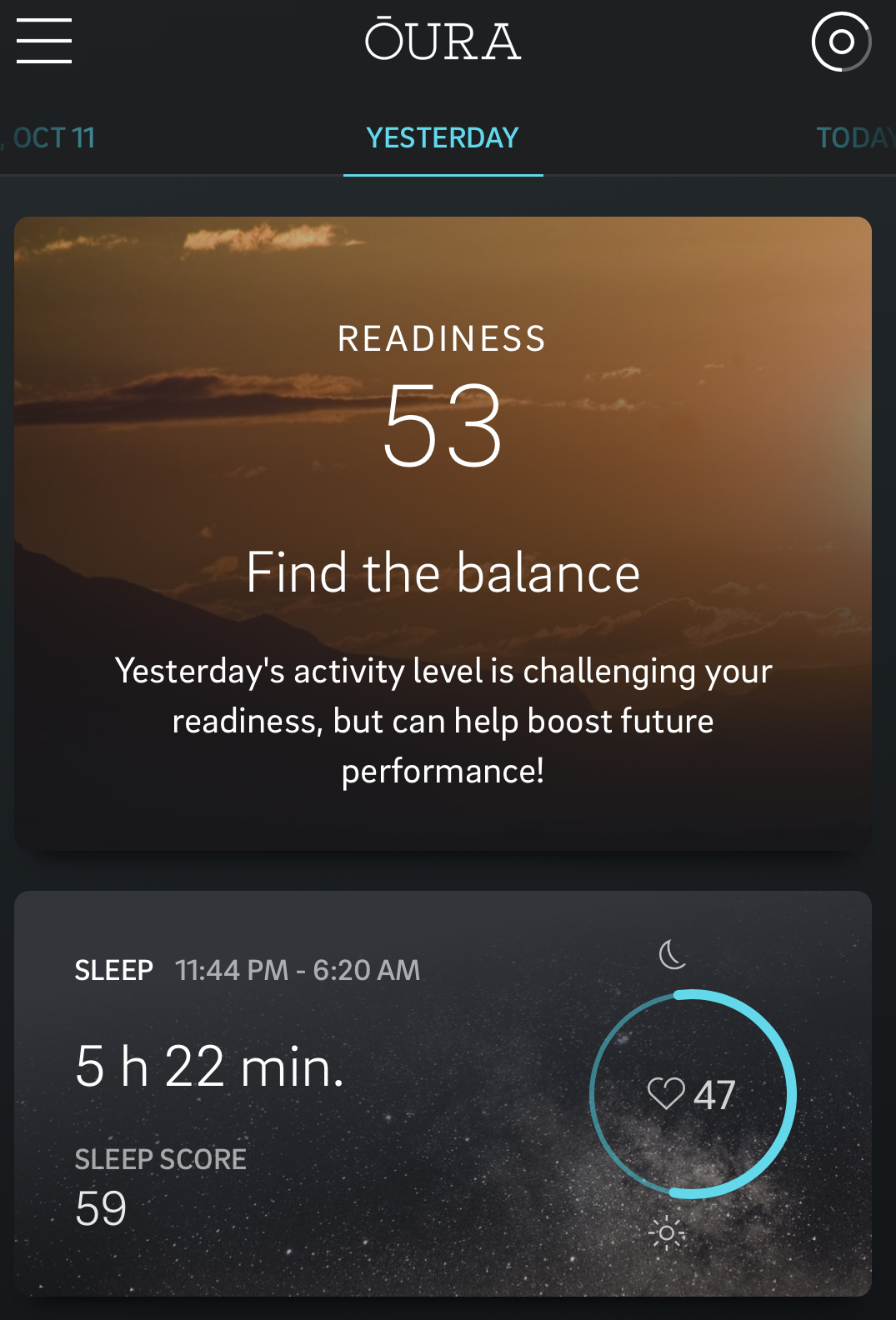
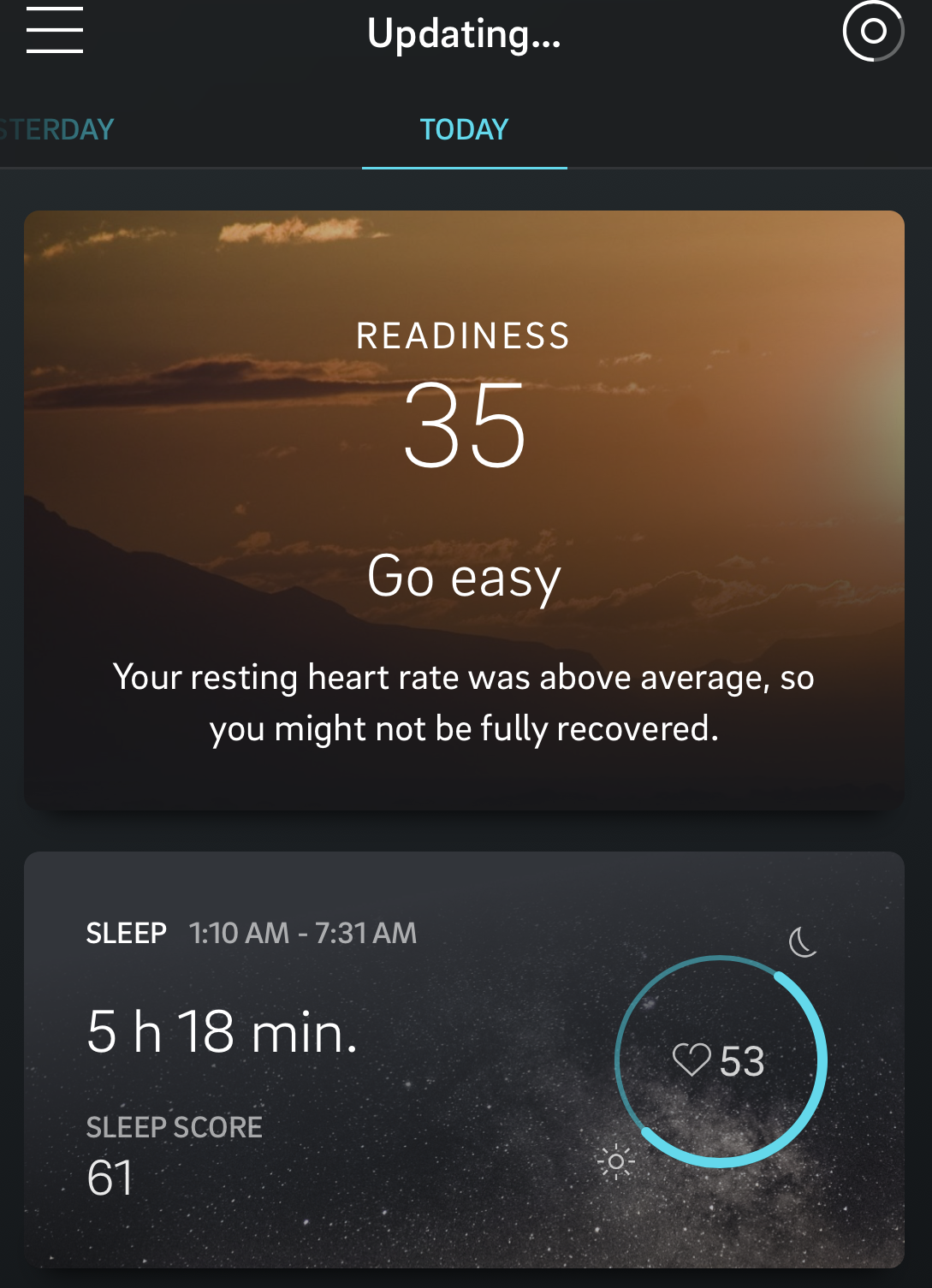
Knowing how various factors impact my sleep quality helps me to make choices to regain balance or simply know that I may wake up feeling less than optimal after a busy weekend like this and that I should go light with training to avoid pushing myself into a deeper hole or risking injury.
The value in knowing that a few nights short of optimal sleep combined with busy and active days crushes your recovery and readiness for training extends to general exercise as well as sport-specific training. If you like to work out just to stay healthy, following a busy weekend like the one I had, you may want to consider doing light weight training only or avoiding it altogether and just doing some low-intensity cardio, yoga, and stretching until your body is more fully recovered.
In addition to considerations with how your workouts are designed to create balance, do what you can to mitigate stress at work, and find other parasympathetic activities to include while you are returning to normal. For me this included getting some extra rest with an hour-long float session once I returned home, getting outside for a quiet walk, and getting extra sleep for the following few nights.
Most often the choices that help us regain balance aren’t the most fun or easiest options (but they will make you feel better) which is why you need to make the conscious choice to improve your recovery and reduce chronic stress levels.
Tips For Regaining Balance
Adjust Your Workout Plan Until You Are Better Recovered - don’t tax the nervous system with high-intensity weights or cardio.
Eat healthy foods - this is completely subjective to you and your goals but you probably know when you’re making the right choices. Use a food tracker like MyFitnessPal for a bit if it helps you get back on track.
Forest bathing - getting deep into nature has restorative effects on your mind, body, and soul.
Get extra sleep - turn off your devices and go to bed early to catch up on some Zzz’s.
Go for a float - find a float centre near you and get into a state of deep parasympathetic rejuvenation.
Reduce caffeine - when your body is reaching its limits you may be reaching for that extra cup of coffee to keep going. Avoiding doing that will limit further contribution to adrenal fatigue and stress.
Plan in advance - if you know you’re coming into crunch time at work or in training, prepare ahead of time with all of the above tips so that your competition or all-nighter at work doesn’t grind you into the dirt.
There are many ways to return to optimal functioning but it all starts with awareness which we intuitively know when we’re approaching burnout and overtaxing ourselves. We don’t always have the luxury of stepping on the brakes and settling down - there are seasons in our lives when we have to go full-tilt forward. But when you can it’s best to slow down and keep balance in place.
If you’re unsure of what this feels like in yourself or if you want even more details, a device like the Oura ring, Whoop, or other HRV tracking tools can help you to quantitatively measure your recovery to keep track of trends. Intelligent use of your own recovery trends will allow you to push yourself harder for longer without getting sick, injured, or burnt out and is a critical factor in the success of many world-class performers across all fields of business and sports.
When you’re stressed and overworked, proper recovery isn’t just going to come to you; you’ve got to create time to regain balance.
Make Time To Recharge Today

The Powerful Benefits of Infrared Sauna Use
It feels really good to sit in a sauna. Working up a sweat and the nice enveloping heat is comforting, like having a nap on the beach on a warm summer day. But here’s the real science behind why sauna feels so good and what working up a sweat can do for your health, recovery, and sports performance. Let’s break it down into the different categories of benefits so that you can pick and choose only what is most interesting to you.
Infrared saunas versus traditional saunas
At Flow Spa, we have a 2-person far infrared sauna with ceramic heaters primarily due to the smaller footprint able to be offered by an infrared Sauna compared to a traditional sauna.
There are a lot of infrared saunas on the market today that fall under two categories: near-infrared and far-infrared. Many biohackers and lifestyle gurus are claiming near-infrared saunas are superior for a wide range of reasons from detoxifying effects to stimulating the metabolism through activating the mitochondria in a way that normal saunas cannot. All of the claims towards near-infrared saunas, which use red light bulbs and do not heat up much, are unfounded.
Compared to traditional saunas, which use wood stoves or heaters to warm the air to very high temperatures (above 185 F), infrared saunas sometimes more specifically referred to as far-infrared saunas, aka FIRS use light and ceramic heaters to warm sauna users directly, providing a deeply penetrating heat at a lower, more comfortable temperature (closer to 140 degrees F).
Far-infrared saunas stimulate blood circulation in your skin, which may help to boost your skin's ability to produce collagen for greater skin health and elasticity.
The great thing about far-infrared saunas, like the one at Flow Spa is that the benefits are supported by the research into saunas on health because all of those findings are attributable to hyperthermia, or the effect of heat on the body.
Can Using A Sauna Help You To Lose Weight?
Detoxification
I’m not a fan of the word “detoxification” because it has become jumbled with all kinds of unvalidated concoctions and fad diets. We do know that sweating, whether induced by the heat of sauna or from hard exercise, is partially caused by fat cells burning up fuel for energy and resultantly anything stored in the fat cells will be carried through the circulatory system or exuded with sweat. Naturopathic doctors often include sauna as part of the treatment protocol for anyone dealing with an excess of heavy metals in their body or a buildup of toxins like pesticides from conventionally grown produce. Because a lot of this bad stuff is released with sweating it’s always important to shower off after sauna use.
Regular sauna sweating can help detoxify the body as it releases heavy metals (lead, mercury, nickel, and cadmium) as well as alcohol, nicotine, sulfuric acid, and other organic and inorganic compounds. The more regular that you can use the sauna during your detox protocol, the better the results you’ll see.
This is one of the most evidence-based methods to detoxify the body of heavy metals and other fat-soluble toxins including persistent organic pollutants.
Sports Performance
There are many incredible benefits to sauna use as it relates to sports performance that almost sound too good to be true. The mechanisms of sauna on enhancing performance are similar to that of exercise itself in that sauna use and heat acclimation increases blood flow to the skin and skeletal muscles. This increase in blood flow to the muscles allows for greater transport of glucose and fatty acids to the muscles to be used for energy, thus reducing the need to rely on glycogen stores for energy. By increasing blood flow to the skin and consequently activating the sympathetic nervous system (SNS), heat acclimation allows sweating to occur sooner and therefore lowering core body temperature. Furthermore, this increase in blood flow also leads to an increase in plasma volume and red blood cell count.
Altogether these effects have been shown to increase run to exhaustion time by 32% when a 30-minute sauna session was done 2 times per week after workouts.
Muscle Hypertrophy
Another sports performance benefit of sauna use is that it can lead to an increase in muscle hypertrophy (muscle growth). Exposure to heat has been shown to mitigate oxidative stress, which will lead to less breakdown of muscle tissue through several actions:
The Signalling of Heat Shock Proteins
Boost Growth Hormone Levels
Improve Insulin Sensitivity
Heat shock proteins repair damaged proteins in the body (i.e. everything we're made of, but especially our muscles) and scavenge free radicals which cause oxidative damage. Part of the mechanism of action is the activation of powerful endogenous antioxidants like glutathione. Adaptation to heat increases the robustness of the heat shock protein release.
Several heat-shock proteins can even help with increasing muscle mass, even without weight training.
Heat shock proteins repair damaged proteins in the body (i.e. everything we’re made of, but especially our muscles) and scavenge free radicals which cause oxidative damage. Part of the mechanism of action is the activation of powerful endogenous antioxidants like glutathione. Adaptation to heat increases the robustness of the heat shock protein release.
Boosting growth hormone levels further allows muscles to repair and grow. Growth hormone is the proverbial fountain of youth when it comes to hormones that our bodies release. When exposed to hot saunas (80ºC) two times per day, there was a 2-fold increase in growth hormone release in research subjects. Any sauna exposure after training has also been shown to further increase the growth hormone release over exercise alone.
Improved insulin sensitivity is a result of the reduction of insulin resistance that comes from sauna use. Part of this may be due to the metabolic similarities between exercise and saunas. Insulin sensitivity means that your cells are better able to use glucose for energy, instead of storing it as fat, and is an important marker for increasing longevity.
Lifespan and Sauna and Cardiovascular Health
Heat stress was shown to produce a 15% increase in lifespan in fruit flies. This increased lifespan is a part of the hormetic induction also seen in humans. Hormesis is the concept that a little bit of stress makes you resistant and more tolerant of greater stressors - like how a vaccine builds immunity. All of the factors in this article are components of the hormetic response to heat stress in the body.
As blood is drawn closer to the skin's surface, your blood vessels expand to accommodate increased blood flow.
This can help to improve endothelial function and blood flow, lower blood pressure, lower oxidative stress (which can lead to heart issues like atherosclerosis), and reduce cardiac events.
Another important factor that can lead to increased longevity is an improvement in cardiovascular health with sauna use. Blood flow to the heart lowers heart rate and cardiovascular strain.
Sauna use has been a part of the Scandinavian culture for a very long time and research has started to link the previous correlation in lower heart disease rates with sauna use.
Individuals using sauna three times per week have lower rates of cardiovascular disease and a reduction in the incidence of heart attacks. Important factors to consider when seeking to improve lifespan.
Infrared sauna treatments cause reactions in the body, including increased sweating, increased heart rate, and the same type of clarity-of-mind feelings as moderate exercise relaxation responses triggered by the body's parasympathetic nervous system.
Immune System
Because while you're in an infrared sauna it raises your core body temperature, the use of sauna may kill off potential pathogens. Through the penetrating infrared wavelengths from infrared saunas, the subsequent rise in core body temperature can induce an artificial fever giving your immune system a boost.
Brain Health, Mood, and Mental Health
It’s not just everything below the teetering tower of intelligence that is our brain that can benefit from sauna use though. Sauna use increases neurogenesis, learning and memory, and improves focus, while also improving mood. How do you like them apples?
Here’s what happens when you heat things up:
Norepinephrine and prolactin release.
Increases in BDNF.
Dynorphin release.
Norepinephrine is a potent neurotransmitter involved in focus and attention. It gets released in large amounts during fight or flight situations but also provides further benefits for focus and attention when not in life-threatening situations.
Prolactin is involved in myelin growth - the protective sheath around nerve cells. Prolactin helps with nerve cell damage repair and maintaining electrical activity in the brain, which is necessary for robust learning and memory.
BDNF is an incredible compound in the body. Brain-derived neurotrophic factor (BDNF) is like miracle grow for brain cells. It increases the growth of new brain cells and preserves existing neurons. It further increases neuroplasticity allowing for enhancements in learning and memory. BDNF has also been shown to decrease symptoms of depression and anxiety. Another bonus of BDNF is that as it circulates through the body it also repairs muscles.
Finally, modulating core temperature may lead to the same feeling as runner’s high. Beta-endorphin - the feel-good hormone released with long-distance running and other exercise is increased due to heat stress. The pathway that leads to this effect is convoluted as it first causes feelings of discomfort.
Hyperthermia increases something called dynorphin - it’s involved in that dysphoric feeling of discomfort that you get from being hot and sweaty in the sauna as well as during exercise. Dynorphin counters endorphin and helps to cool the body from the heat stress. Subsequently, this leads to an increase in endorphins more than exercise alone so even though you feel a little squirmy from the discomfort of the heat at first, you leave it feeling amazing as the endorphin release counteracts that dynorphin.
So not only does sauna increase blood flow, sweating, and cardiovascular fitness, but it also leads to the same feeling of a post-exercise euphoria where you feel relaxed, happy, and experience less pain.
Sleep
A drop in body temperature at night is one of the circadian cues that the body uses to signal that it is time to sleep. In Why We Sleep, Dr. Matthew Walker suggests taking a warm bath in the evening as a way to help with insomnia or to induce a deeper sleep. Infrared sauna use can also be used to trigger a similar drop in body temperature after coming out of the sauna. If you’re having trouble sleeping or looking for ways to improve your sleep quality, try this method of warming up your core temperature first.
Bask In The Heat
Whatever results you’re looking for it’s undeniable that there are many great benefits to sauna use. Now that the weather is getting cooler our sauna at Flow Spa is becoming more popular as a regular service to make use of and treat yourself. For anyone who can tolerate the heat or has been cleared by their physician, it’s a relaxing and enjoyable experience that works great when you don’t have as much time available to get in for a longer float session or for any of the other benefits listed above that are unique to sauna use.
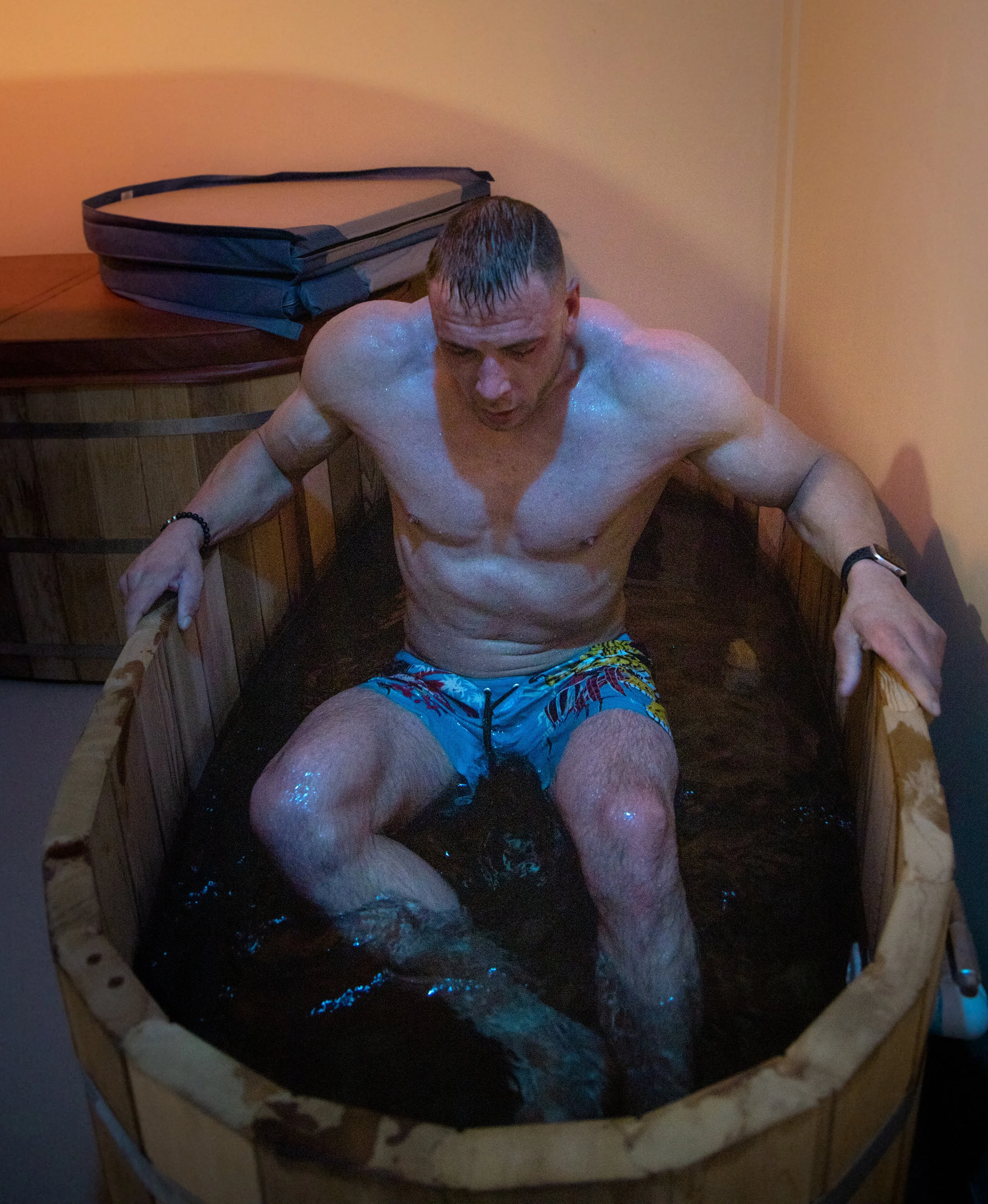
Cryotherapy For Recovery and Pain Relief
I first drafted this blog post as I entered the final week of preparation for the Canadian Strongman national championships a few weeks ago. The context as I had written it was perfect so I didn’t want to change anything up in that regard even though the competition has been over for about a week and a half.
There are countless factors in the world today that contribute to what amounts to a chronic state of inflammation for most of the population. Giving your body the chance to literally chill out is paramount to wellness and keeping inflammation under control.
While I don’t often galavant around with my training for strongman, I’ve come to realize that it’s of interest to our Flow Spa audience, a group that includes many athletes both past and present who are seeking to recover and remain pain-free.
Research has supported a lot of benefits to cold exposure - often known now as cryotherapy - and at its core, it comes down to three main benefits:
Eliminating inflammation.
Reducing pain and boosting feel-good hormones norepinephrine and dopamine.
Increasing blood flow and circulation.
I recently talked about a couple of the keys ways that I use floating for recovery from heavy training, as it positively impacts the physical beat down of heavy weightlifting along with the nervous system overload.
Something that is not just present and pervasive in heavy training athletes but most of our society is a problem with inflammation. Our gruelling exercise regimes contribute to this issue but so does our less than ideal diet, sleep patterns, long work hours, and constant exposure to the blue light of buzzing devices.
My absolute favourite method of immediate sports recovery is contrast therapy which utilizes hot and cold tubs or sauna combined with cold exposure to induce a powerful anti-inflammatory effect.
This method of recovery does take more gumption than going in for a relaxing float and so it’s not suited for everyone but the research on the anti-inflammatory effects of cold exposure certainly makes this therapy compelling. Runners who immersed their legs in cold water immediately after hypertrophy-stimulating workouts inhibited that muscle growth compared to runners who did not use cryotherapy. This research has led experts to agree that the best time to include contrast therapy or cryotherapy is not immediately post-training like the football teams of old.
Instead, it’s best to do it on days off or as far away from training as possible.
So if you were to train in the morning, it would be best to do your contrast therapy recovery at night. This consideration is most important when you are trying to stimulate muscle growth or strength gains with your training. If you are just working out for health, it won’t be as big of a deal for you. Another caveat is that I consider it a positive to include contrast therapy to reduce the turnaround time between events placed closely together, like when an athlete has a weekend full of tournament games to play and needs to be fresh for the finals.
When it comes to general pain and inflammation these powerful effects still apply, acting like a natural dose of ibuprofen to kick out inflammation and reduce pain. The circulation effects are also very beneficial for those who gradually increase their tolerance and exposure to contrast therapy so as to not shock the system too severely. While soaking in the warm water of the hot tub, blood vessels dilate and then when moving to the cold tub the autonomic response of the nervous system is to constrict the blood vessels to keep the core temperature up.
Moving back and forth from hot to cold therefore acts like and additional pumping mechanism to move the blood through the circulatory system. Increased circulation through any mechanism has been associated with reductions in cardiovascular disease and the incidence of a heart attack.
The other benefit of cold exposure in keeping the body and core temperature warm is that it activates a special type of fat in our body called brown adipose tissue (BAT) which is metabolically active, unlike typical fat stores, and increases in BAT activation is associated with weight loss. Another cool effect (pun intended) of cold exposure is that has been confirmed in the last couple of decades is that we can overtime increase our stores of BAT which was previously thought to be impossible and this can lead to consistent increases in our metabolism over time.
Finally, both the shock of heat and cold lead to euphoric sensations and increase our mood. You may have heard the old story of how Van Gogh was subjected to daily ice baths as a way to control his mercurial mood. Our bodies are incredibly adept at staying in a happy norm but when we push ourselves out of our comfort zone, there are interesting reward mechanisms in place in our bodies. Both heat exposure and cold exposure that leads to an initially uncomfortable feeling in our body lead to the release of a hormone called dynorphin. It’s a kind of protective mechanism in our body that tells us we’re in a situation that we need to be vigilant of and get away from. But when we maintain conscious control to keep ourselves in an uncomfortable situation and literally push past that metaphorical comfort zone, there’s a subsequent rise in endorphins to balance out that dynorphin release, along with a boost in dopamine and norepinephrine which lead to euphoria and a clear focus.
If you ever do take the plunge and try an ice bath, getting out of it you feel incredibly refreshed and focused. I liken it to a cup of coffee without any hint of anxiety or jitters to go along with it.
Any hot or cold exposure can also help us sleep better as one of the primary sleep-inducing signals to the body is a drop in body temperature which can come from either getting really warm and letting your body cool back off before bed or literally plunging yourself down in temperature with cold exposure prior to sleeping. Either way leads to deeper and more restorative sleep.
Reach Out If You Want To Learn More About How Contrast Can Help You

Finding Your Path
Students face extreme pressures from every direction. Their peers, parents, teachers, and the standardization of tests themselves all combine to make a mental soup of confusion for adolescents who are seeking some understanding of the internal and external worlds around them.
Several of our guests, as well as our co-host Telsi, have talked about how they veered from the path they were ‘supposed to take’ into their true calling
Below are some of the best clips that we’ve had recently in terms of advice that we’d like to share with our young audience looking to find their purpose or some direction on their journey.
We’ve already had a lot of great discussions on the FlowCast and one question that is central to our mission of helping to find your flow is how to navigate the challenges of being a student and finding your purpose. Students face extreme pressures from every direction. Their peers, parents, teachers, and the standardization of tests themselves all combine to make a mental soup of confusion for adolescents who are seeking some understanding of the internal and external worlds around them.
Several of our guests, as well as our co-host Telsi, have talked about how they veered from the path they were ‘supposed to take’ into their true calling
Below are some of the best clips that we’ve had recently in terms of advice that we’d like to share with our young audience looking to find their purpose or some direction on their journey.
Trust Your Gut
Laura was on what seems to be a very common path for students with picking the toughest university in Canada and one of the most competitive environments for students in life sciences. I went through the same route myself and can attest to the pressure and difficulty of undergrad life sciences at UofT.
Laura found the right opportunity at the right time though as she discovered a jobs fair booth for the Canadian College of Naturopathic Medicine and that was the moment everything changed for her.
Nothing Is Permanent
Telsi followed a very similar route through university as Laura and realized that her course selection wasn’t true to herself and her calling. She discovered the Canadian College of Homeopathic Medicine and shifted gears from more traditional life sciences into homeopathic medicine. Recognizing that psychology and mental health played an important role in the lives of the clients that she regularly met with, Telsi did eventually return to university to round out her skill set as a personal trainer with a psychology degree.
Fight for What You’re Passionate About
Many of the most successful athletes and business people go all-in on their passion. While they may still acknowledge the risk involved, these people put everything on the line to achieve a level of mastery that we all can glean inspiration from.
Mike Doherty felt so passionate about Muay Thai that he left his job so that he could focus all-in on the training he needed to do to become even better. He opened a gym and started coaching other athletes to become champions themselves and furthered his skill.
Water Finds its Way
If you’re feeling lost or without a purpose, know that it takes more time and more experiences. You don’t know what you truly love to do until you have lived and experienced many different things. Slow down and have patience. You’ll find your way.

How Teachers Can Benefit From Float Therapy
Back to school time in the fall is a challenging transition for students and teachers alike. Momentum shifts and that sense of the grind through to Christmas as the weather gets colder imposes upon our psyche.
The stress of the new school year is also compounded by the new germs being passed around which often leads to an uptick in colds shortly after the summer break.
Having a strategy to incorporate mental and physical wellness into your weekly and monthly routine is essential for maintaining good health year-round but becomes critical at these transitional times.
Back to school time in the fall is a challenging transition for students and teachers alike. Momentum shifts and that sense of the grind through to Christmas as the weather gets colder imposes upon our psyche. The stress of the new school year is also compounded by the new germs being passed around which often leads to an uptick in colds shortly after the summer break. Having a strategy to incorporate mental and physical wellness into your weekly and monthly routine is essential for maintaining good health year-round but becomes critical at these transitional times.
Teachers can benefit from floating through:
Powerful stress reduction.
A chance to get away to a quiet oasis without having to travel.
Joint and muscle pain relief.
Float therapy is a wonderful way to reduce pain and stress naturally. Being supported in Epsom salt water that is denser than the Dead Sea allows your body to completely relax to relieve tension. The unique stimuli-reduced environment of a float pod or float cabin also allows your mind to let go of stress and anxiety.
Stress Reduction

Teaching is a challenging and demanding job with all of the different factors that go into commanding the attention of a classroom full of students, all with their unique personalities. Combined with the tight timelines of grading work, and countless other factors, teaching can be very stressful. Float tanks may be the best technology we have to combat stress. Research has shown a significant reduction in cortisol levels come about from just one hour of floating. Anxiety is also significantly reduced and the “post-float glow” feeling of complete relaxation you get while not having a care in the world is extremely helpful when needing to unwind after a long day or a long week.

A Quiet Oasis
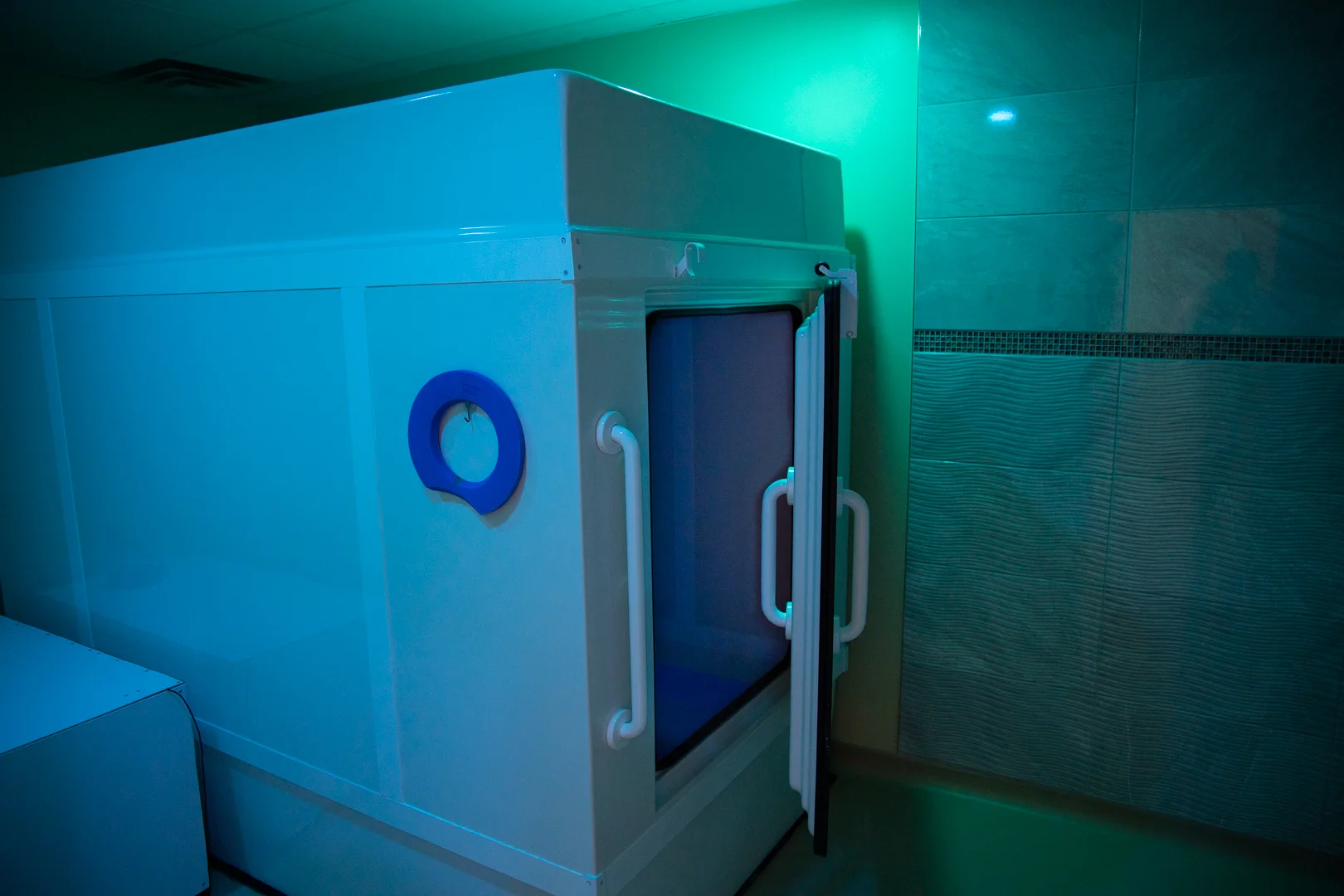
The float therapy experience is incomparable. Customers leave saying that they’ve never experienced anything quite like it because we are never in an environment with no external stimuli. While some new floaters opt to leave the lights on or music playing, the benefits of the experience are compounded when you immerse yourself in the stimulus reduction through turning off the lights and letting the music fade out. This gives your brain the chance to bask in complete silence and darkness which extraordinarily refreshing in the overstimulated world that we live in.
Pain Relief
Repeated strain from grading papers and desk work can lead to a lot of tight muscles and pain in the body.
There’s over 1,000 lb. of Epsom salt in each float tank, making it denser than the human body and allowing you to float completely without effort. Research shows this decompression is beneficial for back and neck pain, and ongoing studies are working towards validating the benefits that we’ve seen at Flow Spa with clients suffering from chronic conditions like arthritis and fibromyalgia.
Needless to say, teachers who came into Flow Spa during the final grading and exams before school was out for the summer found their float experience to be exactly what they needed in terms of a reset between grading tests and papers.
Developing different strategies to incorporate a reset into your routine will help to ensure that you are prepared through it all. At Flow Spa, we help in providing guidance with meditation and some of the various techniques you can use to consistently reduce stress and anxiety. Restorative exercise is also essential to maintaining balance and overall well-being. And when you need that time to get away from everything and decompress, float tanks offer an unrivalled experience.

Use This Gratitude Practice To Make Your Outlook Immediately Brighter
As we are approaching the first six months of doors-open business for this burgeoning start-up that is Flow Spa, like any business, getting the momentum rolling forward hasn’t been without its hitches.
Throughout it all, I have had an unwavering sense of gratitude for the business and the support in my life that has allowed me to push forward with this vision.
We often forget the little things that have a profound impact on our sense of well-being. Without a habit being ingrained in your routine, it will fall by the wayside when life gets in the way or you feel you are too busy to take less than five minutes out of your day.
Gratitude is one of those things.
It often sounds so simple and doesn’t take much time to incorporate into your daily routine but seems to be a lost art to many people. That is gratitude journaling or just showing gratitude daily.
Starting your day off with a dose of gratitude makes a world of difference in your outlook and how you feel about the day.
While some people like to kick off the day with their gratitude practice, others prefer to wait until before bed to reflect on the day while looking forward to the next one or the bigger things at hand that you are grateful for.
I suggest trying both methods and finding what works better for you.
People often approach the idea of taking those precious moments to be grateful or to write it down as a waste of time because they are naturally pessimistic or feel like they don’t have a lot to be grateful for in their current situation. A lot of people get confused about practicing gratitude and think that it has to be things that are immediately present and make your world seem like it’s all sunshine and rainbows.
It can be beneficial when working towards a goal to have gratitude for that bigger goal at hand. Recognize that you are working towards something that will better you and you can be grateful for how far you’ve come already or if you’re just getting started, be grateful for the path ahead of you because having a goal and a mission to accomplish brings us a deeper meaning.
To balance this goal-oriented gratitude I have found that the way Tony Robbins practices gratitude has a lot of power to it.
Balanced Gratitude Practise for Optimism
The gratitude practise takes all of three minutes a day and consists of:
Something relatively goal-oriented, the type of gratitude that we typically see as we look forward to some expected outcome.
Something immediate and relatively mundane. Look around you on a macro setting- it could be the feeling and warmth of the rising (or setting) sun on your skin, it could be the sounds of the birds around you, the smell of summer, the colours of the vibrant flowers in your field of vision. Get specific and take a moment to deeply embrace that feeling.
The final type of daily gratitude is to reflect on a past relationship or experience with another person (or place) and relive the lessons that you have learned that you are grateful for because of that person or place.
By breaking up your gratitude practice into three distinct pieces, you won’t always write down or contemplate the same things. This is why writing down your daily gratitude list can help you to catch yourself from running on autopilot and make the practice more potent if you tend to always think of the same answers. Writing it down also forces both hemispheres of your brain to work in concert to actualize the gratitude more deeply. Priming the nervous system in this way is powerful so I do recommend writing your gratitude lists down in a journal, on a notepad, or even in a note on your phone or computer.
Try it out for yourself.
Start with one week and do the practice every day at the same time. Prime your day in the morning or set your mind at ease before bed with a nighttime practice. Get it done and see how you feel after one week. I’m certain that it will help to bring more optimism into your life and you’ll realize that this is a valuable practice to incorporate for life.

Unlocking Creativity and Flow Through Breathing
Can we unlock deeper states of creativity and flow states through breathing?
We often hear the question arise about what do you do in the float tank?
Other than the pithy answer of “well, you just float,” it often helps to provide some open-ended guidance to those new floaters who maybe don’t have a lot of practice with single-point meditation or focused yoga.
Breathing is often the first place I turn to when recommending something to focus on when floating. Your breath and your heartbeat are the only things you can hear if you’ve turned off the music and so you can either embrace it or it may become a foe like the telltale heart of Edgar Allen Poe.
It still sounds a little hokey, but learning to attend to your breath and breathe more consciously is doing miraculous things for people’s health. You can do anything from reducing stress to performing and recover better in sports all just by shifting the way you breathe.
Most of us breathe an average of 12 times per minute and this isn’t far away from what researchers suggest is a sign of a stressed body at 15 breaths per minute. Shifting your body into a relaxed state takes a little conscious awareness and practice to reduce your breathing rate to less than 8 per minute.
I believe that getting into this relaxed state alone is enough to induce deep states of flow in the tank and enhance creativity by allowing your brain to function more optimally.
However, to take it a step further, there are techniques more deliberately designed to tap into the creative centres of your body, as you practice and develop more conscious awareness of oxygenating your body through deep breathing.

This is an example of a Wim Hof Method (WHM) technique used to specifically induce creativity through thyroid activation. This is a more advanced technique with the Wim Hof Method and while you may try and practice it, I will be releasing more information in the coming months about how you can join me in learning more of the fundamental techniques to help you get more out of the practice.
WHM Technique for Creativity:
* Never push anything past your comfort zone. This isn’t about doing anything to extremes. It’s about developing more control and capacity in your body over time.
* Get into a comfortable position, either seated in a chair or preferably lying flat on the floor.
* Begin WHM breathing - fully breathing into your belly, chest, head in a wavelike motion. On the exhale, only let your chest and belly fall without effort to retain most air and oxygen.
* Repeat this wave-like breathing for about 30 breaths until you are fully oxygenated. The signs of an effective round are that you will begin to feel lightheaded, tingling in the fingers and toes, and loose in the body.
* On your final breath, fully inhale, fully exhale, fully inhale again and hold at the top of the breath with your lungs full of air.
* Squeeze your chest and neck and push that oxygenated blood into your upper chest where the thyroid is located. Only partially squeeze the neck to avoid the sensation from going to your head, which is another technique for different intended purposes. It helps to visualize the blood going to your chest and thyroid as well.
* Hold for about 30 seconds before exhaling fully.
* Repeat two more full rounds before ending or doing some regular WHM breathing for relaxation.
This practice will take between 15-20 minutes depending on your pace of breathing.
After completed it helps the first few times to sit for a moment and take inventory of how you feel. If you are doing the practice for the intended tapping into your creativity, you would then ideally sit down to do the creative work you’re wanting to do.
This might not make complete sense at first, but we talk about it in this podcast episode here as well and watching the video version may help to better see how it works. Read or listen through a couple of times while trying it out for yourself.
P.S. I will be running some seminars inspired by the Wim Hof Method and other meditations that I’ve learned from in the coming months and so follow us on social media or subscribe to the email list to get advanced notice on the limited space that will be available in each of those groups.

Do This To Conquer Boredom
It's ok to be bored sometimes.
It's ok to be bored sometimes.
We are driven. Doers.
Every minute planned; every to-do list spewing out to the margins.
And when we have a moment to come up for air, we choose to hold our breath and take another dopamine hit from the social media slot machine. Who’s doing what that’s more exciting than our reality? Who liked our selfie?
At the end of it all we are so run into the dirt that we can no longer choose for ourselves - take our binge watching of The Office, yet again, as case-in-point. The never-ending slump into ‘blah.’ Over time we lose our spark. Our uniqueness is dissolved into the technological soup of humanity and the vicious cycle keeps turning round and round. Our health suffers. Our lives suffers. Our relationships suffer. We suffer.
Every moment of every day we have a choice. Many of those choices may seem to be pre-filled - eight hours here for sleep, another eight for work there, but that still leaves eight hours - not to mention the number of opportunities most of us have at work to make the right choice when on break or switching between tasks.
The choice we have in front of us is that of choosing boredom and then conquering it. We are becoming less human because we give ourselves no chance to just BE anymore.
We come to find our true selves in boredom. We remember. Everyone is so desperate to be someone on social media but we already are somebody in the real world.
People are showing signs of withdrawal symptoms when they are unplugged for too long today. Our smartphones and the apps we use daily have been engineered to be addictive. That constant dopamine drip when unplugged will leave us itching for another hit.
For the sake of your self, your health, and your peace of mind, you must resist regularly.
Conquering boredom is easier said than done. You’ll feel like you’re missing out on something when you look around and see everyone else plugged into a digital landscape and completely unaware of what’s right in front of them. You’ll seem strange, in fact, to choose yourself over your digital avatar.
You’ve been convinced that you’ll miss out on something but you won’t; not really. You’ll actually be receiving so much more in return.
The next time you’re waiting in line at the grocery store or waiting for your friend to arrive for dinner at the restaurant resist the urge to immediately pull out your phone and swipe mindlessly. Because the urge will come immediately - take note of that. And instead take a deep breath - focus intensely on that breath. It feels good to breathe deep. Much better in fact than looking through your Instagram feed like a mindless zombie.
It may feel boring, true, but overtime your overstimulated nervous system will relearn to settle down. It wasn’t very long ago that our world wasn’t like this. Only 15 years ago we didn’t have the same fidgety issues at such an epidemic scale and a generation ago we were content to sit quietly or allow our imagination to wander without intervening.
Think about the simple pleasures a dog gets from sitting and waiting. The depth that comes to the world from the sounds, smells, and sights that are ever-present when we let them just come to us.
So return to your breath or just let your thoughts process for a change. What you call boredom isn’t always as it seems. You’ve just unlearned what to do with your own thoughts as you constantly have the inputs of other consciousnesses bombarding your own.
Overtime it will become easier to embrace the boredom and to allow the stillness to settle in.
And in this stillness, in this silence, you will realize that it’s all ok.

Digital Minimalism - A Podcast Prologue
This week we’ve got a big and important podcast episode for you and I wanted to clear some the thoughts in my head for it prior to the recording because it’s a topic that I’m passionate about and have been studying a lot about in the past few years.
So before I go off rambling on the podcast I wanted to refine my thoughts and target the conversation to be actionable as well as perhaps eye-opening to some of our audience.
The topic is Digital Minimalism.
Who’s In Control?
Several books in the last few years have started to rally towards the need for more control when it comes to all the great and powerful technologies we have in our lives today. At the heart of digital minimalism is the realization that we are becoming slaves to our digital devices in many ways.
This sounds like some sort of sci-fi dystopian scare tactic but it isn’t. Not yet at least.
Technologies do a lot of great things for us but we are evolutionary beings with incredible susceptibility to the shiny object that stimulates the reward centres in our brains the most. This is what technologies like smartphones and social media apps do best, and not by accident. There are many scientists and engineers behind these technologies while their sole job being to make them as addicting as possible. The same people who design slot machines in casinos are working for companies like Facebook or inspiring the work of their software engineers.
Social media sites want you to stay on them longer, because as the whistleblowers and people making cautionary statements about social media say, we the consumer are the commodity being sold to the real customers who are the big companies and ad agencies buying ad space on the likes of social media giants like Facebook, Instagram, and Twitter.
Furthermore, these companies are taking ownership of the data of our lives - where we live, where we travel to, what we do every day, and the questions that we are Googling. These data points are refining our digital experience and also being sold for big bucks to the highest bidder wanting our personal data.
It sounds a little scary and it can be if you are an unwitting subject to this reality without making informed decisions and operating with some restraint and forewarning.
Is Social Media Really An Issue, Or Something We Need To Accept?
Many people on the opposite end of the spectrum say that there’s nothing wrong with this and it’s just the way the world works today but that’s not entirely accurate to say. Not only because it’s exploitation on our susceptible biology that we want the easy and immediate rewards in our lives - delayed gratification is a product of our consciousness and insatiable need for growth as human beings and not what we as animals have evolved to want to do. (Have you ever seen a dog pass up a treat in exchange for TWO treats later? NO! And not just because the dog will beg for more treats later).
But this delayed gratification is something that we can and often do as humans to achieve greater meaning. You can have your cake and eat it too but you’ve got to use moderation in the short-term to achieve those bigger goals.
The other reason that the argument that we just have to accept the way the world is today is missing the point is that excessive use of social media, which is ubiquitous, is harmful to our health. Social media has been correlated with an exponential increase in anxiety on college campuses. Social media researchers are showing that the ease of access to social media is making us feel more lonely and socially isolated. When it’s easier to jump on Instagram and double-tap that photo of your friend’s food rather than meeting to go out for dinner together and turn your phones off to have a deep and undistracted conversation or binge-watch Netflix instead of getting together with friends to go hiking when you feel a little “blah” it becomes a real problem for our ability to have those conversations and truly live as a tribe.
It’s true that we’ve far-surpassed our tribal connection which Dunbar’s number considers being 150 people and we may use that in a very empowering way to expand our reach and opportunities in this world but how many of those people would really be there for you if you needed them? That’s one of the issues and the dichotomy between having stable social relationships and those superficial relationships that “Liking” and “Retweeting” online give us.
So what can we do about it?
The Solution For Social Media Addiction
First, recognize.
Recognize that feeling of malaise that you get when you’ve glued yourself to the couch binge-watching Game of Thrones (not to mention the sobbing uncontrollably when another of your favourite characters gets his or her head lopped off).
Recognize that you’ve swiped through all of the latest photos from your friends and all of their Stories are just pictures directing you to check out their feed post on their bio.
Recognize that there’s more to the world than what’s happening on the five-inch piece of glass glowing so bright that it affects your melatonin production and sleep quality.
And once you recognize, take small steps (or big ones) to make a change.
Digital Detox
Digital Detoxes like the one Cal Newport suggests in his book Digital Minimalism are the best way to completely reset and pull the tentacles of addiction out of your skull for good. Small steps are less impactful but you’ll see pretty quickly how out of control of your brain you are when you try to check your social media profiles less than for the over 60 minutes a day we are on Facebook out of the 80 times per day we check our phones on average or reduce frantic email checking to one to two blocks per day.
We all lose our ways over and over again. Recognize that as well. There is no final solution, other than becoming a hermit and moving off the grid and into a cabin in the woods. You will get sucked back into the digital spiral again and again.
But just start again.
Do another Digital Detox, reduce your screen time. Turn your phone off at the dinner table. Check your screen time - all phones do it now - and reduce it by 10 minutes per day for a week. Then push that number a little further. Fill that time with something worthwhile to reduce the temptation.
Whatever strategy you choose to go with, your non-digital brain and body will thank you for it and you’ll be living with more meaning again.

Everything You Need To Know About CBD, Briefly
You’ve certainly heard more buzz around CBD oil as it seems like every industry is capitalizing on this trend and making use or touting the benefits of CBD oil. But what exactly are the benefits of CBD and how does it work?
You’ve certainly heard more buzz around CBD oil as it seems like every industry is capitalizing on this trend and making use or touting the benefits of CBD oil. But what exactly are the benefits of CBD and how does it work?
Let’s break down the science of why CBD oil works to reduce pain in the body while improving mood and symptoms of anxiety.

CBD or cannabidiol is a component of the cannabis plant, you know, marijuana - the stuff that was recently legalized across Canada and no longer carries with it the old “refer madness” perspective. Now, I don’t think everyone is completely over the stigma of cannabis and may have sensitivity or allergies to hemp and while some companies, like Calyx Wellness which we carry at Flow Spa, do a great job creating a very pure and refined CBD oil, we’ll go over some alternatives for anyone looking for natural pain relief without CBD.
How CBD works
CBD is a fatty acid amide hydrolase (FAAH) antagonist. You don’t have to remember this, but it increases anandamide in the body which then activates the CB1 and CB2 receptors throughout the brain and body. Anandamide is a neurotransmitter associated with euphoria - its name comes from the Sanskrit word meaning “joy, bliss, delight.” Sounds pretty good right? It also appears that higher than normal levels of anandamide in the brain and body can lead to reductions in anxiety, lack of fear, and enhancement of the immune system.
The Role of CB1 and CB2 Receptors
The CB1 and CB2 receptors are the main receptors of the endocannabinoid system. Early research into this system was shown to be the target of action for phytocannabinoids like THC and it wasn’t until later that scientists discovered anandamide’s activity on these receptors. CBD has a low affinity for the CB1 and CB2 receptors themselves but works indirectly on those pathways for pain and anxiety modulation through its action as a FAAH antagonist amongst other pharmacological mechanisms.
The CB1 receptor is located in the brain and central nervous system and is primarily associated with euphoria and mood regulation as it is targeted by cannabinoids like CBD, THC, and anandamide.
The CB2 receptor is located throughout the body as part of the pain signal pathway and modulates the inflammatory response in the body.
Because of the mechanisms of action, both CBD and THC can reduce pain and lead to improvements in mood, while CBD does so without the psychoactive effects of THC, meaning you won’t get high from CBD.
This makes CBD a very safe and effective way to improve mood, reduce anxiety, and mitigate pain and inflammation in the body without the harmful side effects that anxiolytics and over-the-counter pain medication has.
Globally, we’ve been seeing an increase in CBD use with both topical application and internal use for a wide range of conditions including:
anxiety including social anxiety and PTSD
depression
pain, including arthritis and fibromyalgia
stress symptoms
dermatological conditions like psoriasis and dermatitis
addiction and neurological conditions
sports performance
The dosage depends on body weight and the severity of the symptoms that you are trying to remedy. Most people will start out with more modest dosages of around 10-20 mg per day and gradually increase daily or every few days until the desired effect is attained.
What if you’re still unsure about CBD?
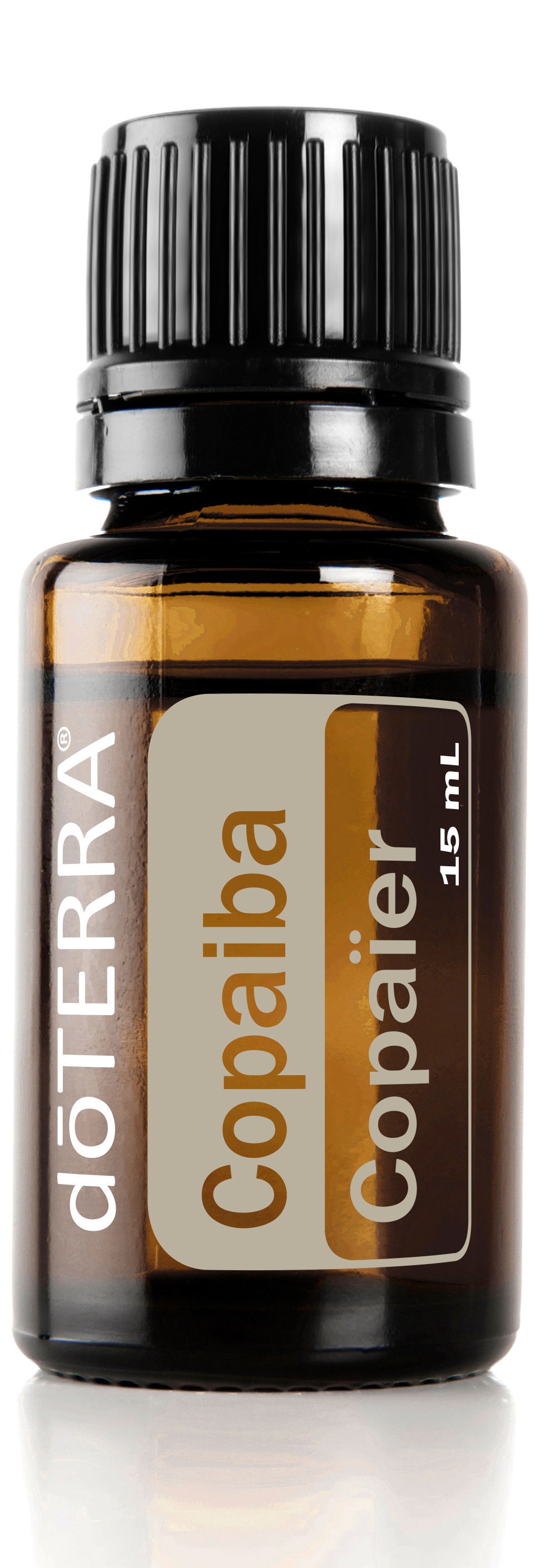
Plants have evolved incredible defence systems and pharmacological effects and through sheer human curiosity, we continue to find more promising ways to benefit as we experiment and learn about the effects of various plant compounds. Copaiba is an oleoresin coming from the Copaifera genus of South American trees that is concentrated in beta-caryophyllene or BCP. BCP is another compound that has been shown to directly act on the CB2 receptors, thus creating an anti-inflammatory and antioxidant effect throughout the body.
Copaiba essential oil from doTERRA is produced in its native regions of South America and cleanly distilled to pure essential oil making it safe for internal consumption where it can then take effect.
We carry Copaiba from doTERRA at Flow Spa and a few drops under the tongue or in your water each day can help to reduce pain and inflammation in the body. Our customers have told us that taking Copaiba daily has reduced their pain and arthritis symptoms to such an extent that their health care practitioners are impressed with the progress they’ve been making.
Genuine Health Natural Pain Relief

At Flow Spa we also carry the full line of Genuine Health products - a company renowned for their commitment to excellence in quality and research validating the effectiveness of their products. Several of the products from Genuine Health are specifically formulated for safe and effective natural pain relief, both acute pain symptoms and more chronic symptoms. Their fast pain relief+ product is used for acute symptoms of pain and works more effectively than Aspirin at blocking pain within 2 hours.
In addition to this, Genuine Health has a selection of specifically tailored long-term and chronic pain remedies that work for moderate-to-severe joint pain and arthritis in as little as 5 days. The most beneficial aspect of these products though is not just the reduction in pain symptoms but that rather than just blocking pain signals, they actually work on the root cause of the pain by reducing inflammation in the body to promote healing.

How Debbie Relaxed For Two Days Pain-Free After Float Therapy
The first voicemail was a courtesy call from Debbie to thank me, no need to call back. Debbie hadn’t had pain all day and didn’t have to take her usual cornucopia of pills.
The second call we received later from Debbie was even better…
The first voicemail was a courtesy call from Debbie to thank me; no need to call back. Debbie hadn’t had pain all day and didn’t have to take her usual cornucopia of pills.
The second call we received later from Debbie was even better…
The healing potential of the float tank is quite incredible.
It’s hard to say just how and what benefits will come to any individual until they’ve entered through the doors of our float centre and stepped into another world of relaxation.
I’ve previously talked about how floating alleviates my back pain - a byproduct of years of heavy weightlifting - and this is something that has shown to be scientifically validated. There’s documentation consistent with these personal findings.
The oftentimes more amazing results come at the fringe of research where ongoing studies are working through the process of confirming hypotheses. This is where someone comes in not knowing if they will simply get an hour of deep relaxation and peace or if it will go further in alleviating deep-seated pains that have been persistent for years.
It’s been happening just like this so far at Flow Spa. A cosmic roll of the dice. What bonus gift will be dished out to our next customer? Will it be better sleep, a quieting of the mind, or the blessed release from the mortal coil of chronic pain?
It’s been happening more often than not and that’s why I’m convinced it’s only a matter of time before the ongoing research confirms these further benefits.
Everyone gets the relaxation once they get past the learning curve of the first 15 minutes or so. What’s on top of it is the icing on the cake.
From ages 13 to 89 we’ve already facilitated an amazing experience to an incredibly diverse group of customers but some still stand out as having their lives do a complete 180º after visiting us for a float.
Another phone call was received several days later. Debbie was ecstatic. She couldn’t believe that she’d had two full days free from pain. The first time in what felt like an eternity.
Everything becomes better and easier when you’re not constantly in pain.
All the difficult times seem worth it when our customers become our friends and feel such gratitude for what we’ve been able to offer them.
This is why we float.
Book Your Float Today

Spring Cleaning To Declutter Your Mind
Spring cleaning is like this quarter's New Years Resolutions, it’s great that we make a whole big event around it but why did we let it get to this point in the first place?
Whether you embrace the springtime for decluttering your surroundings or you keep it up year-round, we all can benefit from doing some more mindful decluttering not only of our environment but also our mental and emotional framework.
Decluttering may leave you with the feeling of a great sigh of relief - not only because your physical space is in more harmony but also your mental state has been granted a reprieve.
We all know the basic principles of decluttering - gather up the junk you don’t use anymore and donate, sell, or throw it out. Today I want to share with you a few brief techniques that may help in your spring cleaning efforts but I also want to emphasize how your physical reality translates to your emotional state and vice versa and if you’re spring cleaning, you might as well clean up the attic too.
The Life-changing Magic of Tidying Up
Marie Kondo has become the patron saint for tidying up and admired by minimalists around the globe because of her book and the inspiration she provides as a professional organizer. It’s become so popular that Netflix has made a series out of it. If you want a fresh take on tidying up that will have you actually enjoying the process, The Life-changing Magic of Tidying Up is a short, but complete, reference to how you can declutter your physical space to create joy in your life.
The basic rule of the “KonMari” method is that you organize by category not location and gather every item into one pile before discarding anything. A massive pile of stuff that you barely use will leave quite the impression on you during this process. You are to take each and every single item and ask yourself if it sparks joy. This may seem like a strange practice with inanimate objects but is the core principle of the KonMari method and seems to be the reason this practice works so well to tidy and maintain that tidy sanctuary once you’ve done it.
Sort in this order clothes -> books -> papers -> miscellany -> mementos
Treating your objects with such reverence shouldn’t be hard to do if they are actually that meaningful to you. If you can’t bring yourself to think of the joy you get from a particular item, it’s time to discard it.
Emotional Baggage Impedes Focus
Spring cleaning can be a great time to discard your emotional baggage as well. The physical act of decluttering lends itself well to improving your mood and this is the perfect time to declutter your headspace.
Consider Jim Rohn’s statement that “you are the average of the five people you spend the most time with.”
During your spring cleaning efforts, ponder your emotional state and who is contributing positively or negatively to your life.
If you don’t get rid of the wrong friends you will never meet the right friends.
Is it time to fire your friends? Maybe even a family member?
Emotional decluttering is much harder than cleaning up your living space but will lead to greater breakthroughs in your life.
This doesn’t happen overnight, although I suppose it could if you wanted to be really aggressive with your action plan. Don’t just point the finger and throw out blame in this process though.
If you’re going to blame someone for all the bad that has happened in your life, be sure that you are also ready to thank them for everything good that has led you to where you are as well.
You must lead with grace to truly exit a relationship with peace of mind and a clean slate.
A Clean Slate Leads To More Flow
Physical clutter is distracting when you are trying to do deep work but emotional turmoil can be catastrophic. Whatever you do in your life can benefit from being in a flow state. It’s what leads to finding meaning in our lives.
You can’t find flow when in a bad mood.
In this week’s FlowCast, Telsi makes the analogy of your mind is like a river flowing smoothly versus the rapids where all the jagged rocks are.
We all face those rapids but the more that you can smooth out your mental landscape the more productive and creative you will become.
If you want to learn more about strategies you can use to do your spring cleaning more effectively this year, check out this week’s episode of the FlowCast where we dive even deeper into this topic and subscribe on Apple Podcast to get notified when a new episode comes out.

World Sleep Day and Recovery
This week’s blog features an audio companion for anyone who prefers to listen - check out this week’s FlowCast here.
Today is world sleep day and with daylight savings time just passed last week, it’s an important time to think about sleep and getting yourself reset this weekend.
Daylight savings time has become a hotly debated issue because it forces us all to accept a lost hour of sleep when we spring forward and for many of us with already full schedules this means we end up losing that hour altogether.
It may not seem like a big deal but from Matthew Walker’s research which is covered in-depth in his masterpiece on sleep science “Why We Sleep” we don’t properly catch up when we’ve accumulated a sleep debt by sleeping more later.
Sleep is an essential part of the circadian rhythm and as such requires diligent daily, not weekly, attention. Something astounding that Walker talks about in his book is that the incidence of heart attacks skyrockets the Monday following the spring forward in DST and plummets when we get an extra hour of sleep when we fall back an hour.
This doesn’t automatically mean that you’re going to have a heart attack because you lost an hour of sleep last weekend but from many people I’ve talked to this week, the change affects us all in subtle ways. The sudden shift in when the sun rises and sets, the sense of feeling the need to catch up all week, it’s kind of a funny feeling.
So what can we do about it?
Matthew Walker might suggest that we can’t make up for a sleep debt but getting an extra hour of sleep or recovery time for World Sleep Day or anytime this weekend can help to get you back on track still in my mind. Take a nap, spend an hour recharging in a float tank, get outside for a quiet walk in nature, turn off all of your devices and go to bed an hour early.
The quick transition of Daylight Saving’s Time is additional stress on all of us. Life is a constant balance of stress and recovery, sympathetic and parasympathetic - yin and yang. Out of respect for World Sleep Day, if you didn’t spend the March Break somewhere relaxing, take an extra hour to do something rejuvenating this weekend and perhaps start to make it a routine - but that’s a whole other topic for another day.

Floating and the Other Services Offered at Flow Spa
While float therapy may be the main attraction at Flow Spa, it’s by no means the only service that we are offering, even as we just get started. As we continue to grow as a company, the services that we provide will also evolve.
More Than Just Floating
While float therapy may be the main attraction at Flow Spa, it’s by no means the only service that we are offering, even as we just get started. As we continue to grow as a company, the services that we provide will also evolve.
In starting out as a new business, the services that we have in addition to float tanks for sensory deprivation include hot and cold tubs used for contrast therapy and the NormaTec pulsed compression suit. Let’s dive into the features of these unique services and talk about who can benefit from them the most.
Hot/Cold Tub
One of the four main treatments rooms at Flow Spa is built for contrast therapy and cryotherapy. We’ve decided to utilize a hot tub and cold tub in this room as it’s the most practical and well-researched form of cold or contrast therapy.
Contrast therapy refers to alternating states of exposure to heat and to cold which is achieved by moving from the hot tub to the cold tub and back in regular intervals. Some of the typical protocols include 10 seconds of hot with 20 seconds of cold, alternating for 4 or 5 minutes. Performance experts like Dr. Kelly Starett recommend extending the cold exposure time to just before you start to shiver and then switching back to the hot tub to warm back up to a comfortable level before returning to the cold.
Cryotherapy implies using the cold exposure of the cold tub by itself and trains the body to better withstand stress, both physical and mental in nature.

Our cold tub is set to 5ºC and so this isn’t the typical cold shower you might take after a hot summer day. So the question you’re probably wondering now is why subject yourself to such torture?
Both cold and heat have incredible healing and restorative properties. Our bodies have become used to living in climate-controlled environments and for most people, extreme temperatures are no longer part of our daily lives, and if they are, it’s usually short-lived. Extreme temperatures are what is known as hormetic stressors - a little bit of exposure can boost our immune system and make our body more resilient in many different ways. It is well-researched and validated that regular, short bouts of cold exposure will improve your immune system to the point that you are better able to fight off colds and other viruses and infections. Cold is also a more potent anti-inflammatory remedy than any drug and if your body is cooking from the inside due to stress and other lifestyle factors, brief cold exposure can help to keep that balanced and maintain your health.
Heat, on the other hand, is cardioprotective. People who regularly incorporate hot tubs or saunas in their lives experience the benefit of a lower risk of heart attack and other cardiovascular diseases, in part because the heat stress exercises all of the interior valves and muscles that dilate the blood vessels to keep us cool during the heat.
The combination of hot and cold may be the most powerful therapeutic solution of all hormetic stressors. Contrast therapy works out the valves and tiny muscles of the cardiovascular system to promote blood flow while also crushing inflammation, which is why it’s the most sought-after rehabilitation and recovery method for top-level athletes. When attempting to recover from intense training and game-day performance, many athletes choose the hot and cold contrast therapy because it has been shown to be a highly reliable method of recovery from injury and for reducing soreness.
NormaTec Recovery
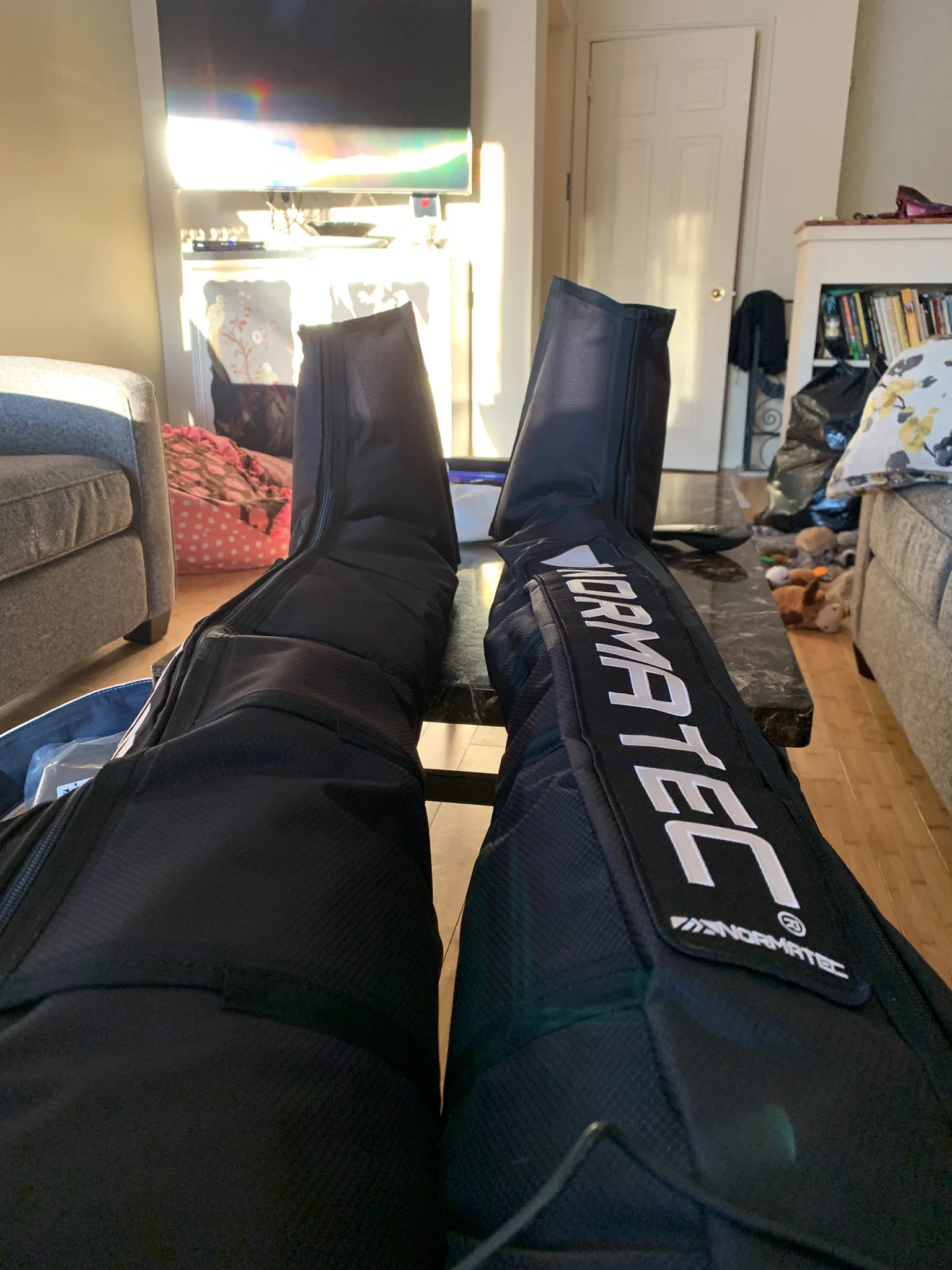
Another sports recovery tool that we have at Flow Spa is the NormaTec compression system. The NormaTec is a pulsed compression suit which promotes blood flow and clears lactate from muscles after training or playing sports. NormaTec works much like contrast therapy but in a more localized manner. This can prove to be useful for athletes with specific body parts that need extra recovery time or for anyone not yet ready to brave the cold water. Because the NormaTec suit is like an intelligent and cost-effective massage, it’s also great for anyone experiencing pain, discomfort, or poor blood flow in their extremities that need regular attention. People with diabetes or Restless Leg Syndrome can see substantial improvements in quality of life by incorporating Normatec recovery sessions.
Guided Meditation with Muse
Our mission at Flow Spa is to help everyone achieve a deeper and truer state of relaxation, which comes not only from relaxing the body but also helping the mind to be at ease. The most effective way to rest the mind is through practicing mindfulness by learning to meditate. We will be offering a whole host of classes on meditation to learn this often tricky art and we also have a Muse headband in our lounge area for anyone wanting to track their mindfulness progress.
Using the Muse before and after a float session can be an interesting way to see just how effective floating is for calming the mind by looking directly at its impact on your brain waves. The Muse headband can also be used to teach you how to reach a proper state of mindful awareness when meditating.
Muse works by using EEG sensors to detect your brainwaves, particularly in areas associated with focused attention or distraction. It then translates those brainwaves into nature sounds which you can use to guide you towards calmer and focus. When your mind is distracted the soundtrack will be more windy and rough waters at the beach, when you’re calm you will hear gentle waves and be rewarded with birds chirping to indicate you are in a calm state.

Using the Muse as a regular part of beginner-to-intermediate meditation practice can help to reinforce your state of mindfulness so that you can get better at helping yourself with stress and anxiety.
Booking Your Appointments
If you’re interested in booking any sessions for our additional services at Flow Spa, you may check out our online booking software for more information. These services will be open for access from everyone in the coming weeks as they become available in our spa.

Use This Morning Routine For Stress-Free Living
All I have is good days.
As I spring out of bed ready to tackle the day and all of the challenges in front of me, I think back to when it wasn’t like this - when the mortal coils of the daily grind seemed to close a little bit tighter around me day after day.
With the right morning practices in place you can inoculate yourself against a lot of the mundanity of daily life and start to find more joy in living mindfully and paying attention to the little things that matter.
Fortunately, I am a morning person and so I do understand that the feeling of a great morning is going to be different for some people. If you gravitate towards the night, then just being able to roll out of bed before 9 may be a victory for you if you’ve owned the previous night and gotten the most out of that quiet time.
Regardless of your disposition towards mornings or nights, we do live in a society that tends to require you to prepare yourself well for the mornings before distractions and stress start to creep in from every direction. If you feel yourself stressing out almost as if the cortisol were oozing out of your adrenals by just thinking about the daily grind, try taking action towards these following tips for starting your morning with a routine that can combat your stress all day.
First Thing’s First:
Keep your phone off. If you really want to start the day off right and without your cortisol levels spiking from a cascade of notifications, keep your phone powered off or at least on airplane mode as you go about starting your day.
Practice Gratitude
One of the simplest ways that you can improve your morning routine is by practicing gratitude. If you are also going to start journaling your thoughts (see below) it can benefit your to write down the things you are grateful for, or you may just want to think about and meditate on them. I find it more powerful to write the things I am grateful for down, an important practice that I will talk about more in the next tip on affirmations.
Tony Robbins talks about including a morning gratitude practice as part of his 10-minute routine to prime his body and mind for a great day. Robbins’ gratitude practice includes thinking about 3 things he is grateful for and spending about a minute on each one. When coming up with 3 things to be grateful for, he recommends that you include one that is a small, simple thing in the present moment to be grateful for.
This simple object of your gratitude could be the cool glass of water you’re drinking or the sun creeping over the horizon.
Whatever it may be, feel grateful for something in the present moment - this ties into living mindfully.
If you want to read more about Tony Robbins’ morning practice read this: https://www.businessinsider.com/tony-robbins-morning-priming-exercise-2017-7
Start Your Day with Intention - Affirmation
In addition to being grateful for 3 things and taking a moment to truly feel that gratitude, write down your intention either for this day in particular or for this overarching chapter of your life.
If you’re seeking a new job, write down that you will ace the interview:
“I will have a great interview today” or “I am the type of person who shows confidence at interviews."
If you’re trying to lose weight, you may write that your goal will be to lose 10 pounds, but also be specific in what steps you are taking on a daily basis to get there:
“I am the type of person who goes to the gym daily” or “I will not eat carbs before dinner.”
These “I am” or “I will” type of statements are more powerful than simply stating what you want because they tap into your subconscious and start the process of you actually identifying with the statement.
In Grounded in Gratitude, Josh Bryant talks about how writing down these intentions or affirmations is also very important.
By actually writing it down, the information is able to be shared by both the left brain and the right brain and so you can more powerfully work on making your goal a reality by synergistically combining the power of your whole brain.
The other benefit of writing your intention down is that by allowing your subconscious to start identifying with the statement, you will be primed to pick out more opportunities to act upon that goal in your everyday life.
Sound too good to be true?
Try it out and fully embody that intention and let me know how it goes.
Journal
Create a short, daily journaling practice to harness these affirmations and things you are grateful for. Tim Ferriss often talks about using a morning journalling routine to get the thoughts bouncing around in his monkey mind trapped on paper so that he can focus on what’s most important for that day.
I like to structure my daily journalling practice around the "Five Minute Journal" concept and then if there are thoughts in my head I need to structure better on paper I’ll write those down after I’ve completed the 3 steps.
The morning component of the 5-minute journal that I’ve adapted looks like this:
1. List three things you are grateful for:
2. List three things you must accomplish today (this is your Power List)
3. State your intention or affirmation for the day, or for this chapter of your life.
Move
Even if it’s just 3-5 minutes, move around and get your blood pumping as soon after you wake as you can. Do a brief yoga and stretching routine or chase your dog around the yard, as Aubrey Marcus suggests in Own The Day, Own Your Life. Moving, combined with the next tip, is more powerful than a shot of espresso to get you kicked into high gear and ready to start the day on a positive.
Cold
I saved this tip for last because it requires the most discipline to implement but is also the one that can have the most powerful effect.
"The Iceman” Wim Hof has popularized cold exposure on his quest to educate people on how powerful the cold and just breathing better can impact your quality of life and your health. Brief cold exposure in the morning fires up your nervous system and releases norepinephrine which will boost your mood and leave you feeling invigorated. Chronic stress exposure can wear down your immune system and leave you constantly battling illness. Research has now validated that the jolt to your body from brief cold exposure has a powerful effect on combatting chronic stress and will reduce your susceptibility to getting sick.
Tony Robbins also includes a cold plunge into his morning practice and has plunge pools installed at his homes to be able to do this daily.
That quick burst of firing your nervous system up in the morning leaves you feeling great and is one of the reasons that we built the contrast therapy room at Flow Spa. In this room, we have a hot tub along with a cold tub set to 5ºC. We will definitely be running the morning Wim Hof club for all of the morning warriors wanting to kickstart their hearts with a cold plunge.
There are a lot of different things that you can start to implement for having a better day and eliminating stress from your life. If you’re already stressed out it may seem like too many things to juggle at once, so instead of trying to add in everything at once, just pick the one idea that’s easiest for you to implement right away and start with that. Overtime as you start to feel the beneficial effect of the routine you can add in more steps to the harness the full power of a morning routine.