Ways Floating Makes Your Life Better
Updated September 2026, from our blog post originally written in 2019.

Search "float therapy benefits" and you will find a lot of big promises. One hour equals four hours of sleep. Cures anxiety. Melts pain away. We have been running float tanks in Peterborough for years, and we would rather tell you the honest version. Some of the benefits of floating have real research behind them. Some are reported consistently by people who float, but the science is still thin. And a few of the claims floating around the internet are simply wrong. Here is what we actually know.
What float therapy is
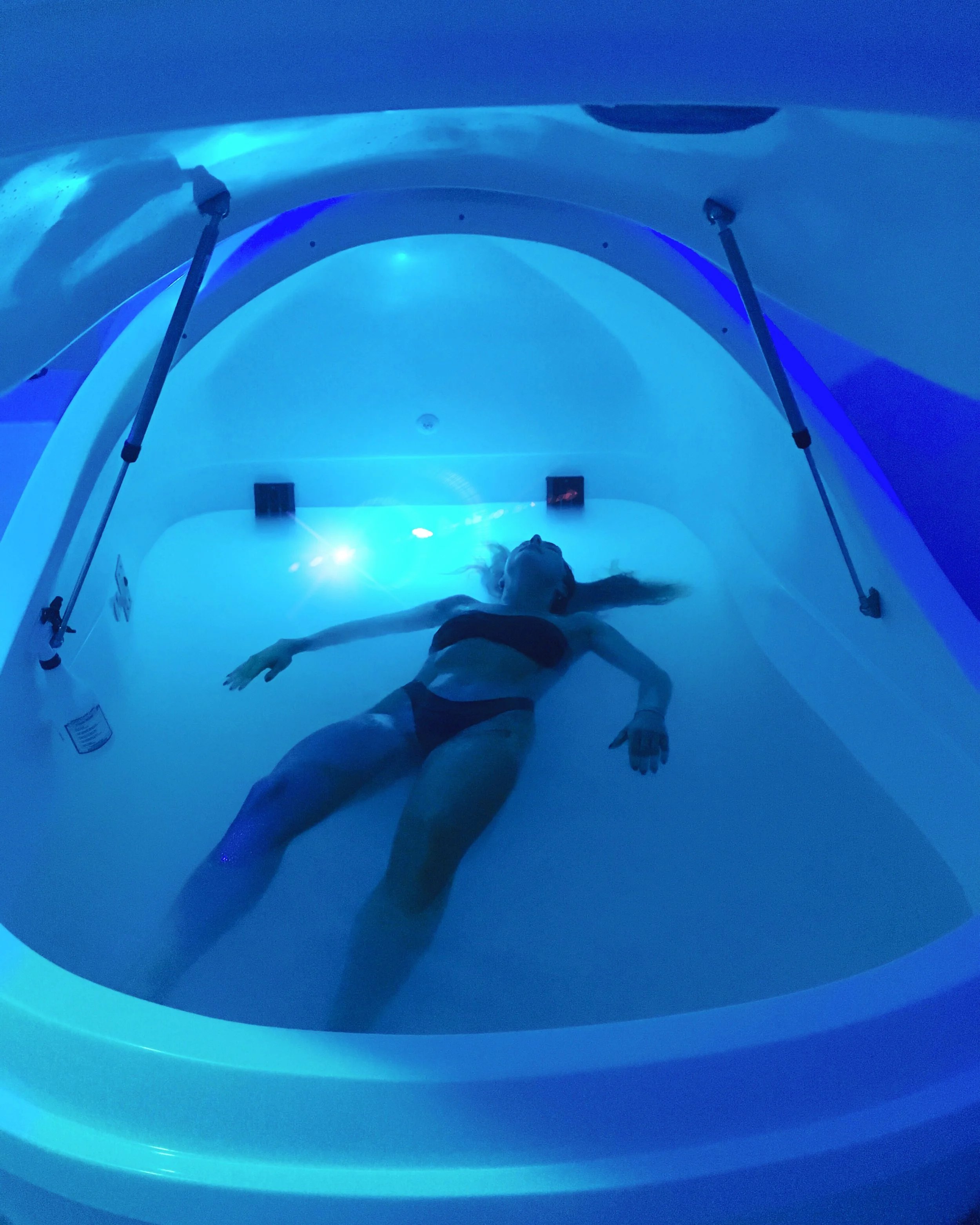
Float therapy goes by a few names: floatation therapy, sensory deprivation, or in research papers, floatation-REST (Restricted Environmental Stimulation Therapy). You lie back in a shallow pool of water saturated with hundreds of pounds of Epsom salt, enough that you float without any effort at all. The water sits at skin temperature. The pod is dark and quiet. Within a few minutes it becomes difficult to tell where your body ends and the water begins, and your nervous system stops fielding the constant stream of input it normally manages: gravity, temperature, sound, light, the pressure of a chair against your back. That reduction in input is the whole mechanism. Everything below follows from it. If you have never been in a tank, our about floating page walks through the practical side, and what to wear in a float tank answers the question we get most often.
The float tank benefits with the strongest evidence
Anxiety and stress relief

This is where the research is most encouraging. A 2018 study published in PLOS One put 50 people with anxiety and stress-related conditions through a single one-hour float. Participants showed large reductions in state anxiety, along with drops in muscle tension, stress and low mood, and increases in serenity and overall well-being. The people who came in the most anxious tended to see the biggest shifts. All 50 asked to float again. That said, a 2023 evidence review found only two randomized controlled trials on floatation-REST for mental health, with samples between 31 and 50 people and limited follow-up. The reviewers concluded that float therapy may offer real benefit for anxiety, but called the findings preliminary. So: promising, consistent with what we hear from clients every week, and not yet settled science. If you are floating for stress relief, the honest expectation is a meaningful reset that most people feel that same day, not a permanent fix.
Muscle tension and physical pain
The salt density does most of the work here. You float without effort, which means your spine and joints spend an hour under close to zero load. For people carrying chronic neck, back or hip tension, that hour of unloading is often the first time in weeks the area has been genuinely at rest. Swedish researchers spent much of the 2000s studying floatation-REST for stress-related muscle tension pain and reported reductions in pain intensity alongside improvements in sleep and mood. The studies were small, so treat this as encouraging rather than conclusive. People with fibromyalgia and arthritis often tell us floating is one of the few things that gives them a break. We take that seriously, and we also will not tell you it treats the underlying condition. If pain is your reason for coming in, it is worth reading massage therapy vs float therapy before you book. They solve different problems.
Sleep
Sleep is the benefit our clients bring up unprompted more than any other, usually the morning after an evening float. The likely explanation is straightforward. Floating lowers physiological arousal, and a nervous system that has downshifted has an easier time falling asleep. There is early research linking floatation-REST to improved sleep quality in people dealing with stress and pain, though sleep is usually measured as a secondary outcome rather than the main event. One thing we want to correct: a float does not replace four to six hours of sleep. That claim comes from a misreading of theta brainwave activity, and it is not supported. We wrote about it in does floating equal six hours of sleep if you want the longer answer.
The benefits people report that research is still catching up on
Mental clarity and creative problem solving
There is very little formal research here, and it is the reason a lot of our regulars keep coming back. Removing external input for an hour tends to surface the thinking you have been too busy to do. Writers, founders, students and people mid-career-decision often describe going in stuck on something and coming out with the shape of an answer. Musicians and artists have used float tanks this way since the 1970s. We would call this a well-documented pattern of experience rather than a proven effect. It is real enough that we would recommend booking a float before a hard decision, and honest enough that we are not going to call it science.
Skin and magnesium
Our float solution is close to 30% Epsom salt, which is magnesium sulfate. Clients with dry skin, eczema and psoriasis regularly report their skin feels better after floating, and the exfoliating effect of a high-salt soak is not mysterious. The magnesium absorption story is shakier. Whether meaningful amounts of magnesium cross the skin during a float has not been well established. If you are floating specifically to address a magnesium deficiency, talk to your doctor rather than relying on the tank.
Athletic recovery
Floating gives your body a full hour with no compressive load, which is genuinely useful in a hard training block. Elite athletes across swimming, basketball and combat sports have used float tanks for years, largely for the mental side: visualization, downregulation between sessions, and getting out of competition headspace. For measurable recovery markers, the evidence is early. We would put floating in the same category as a rest day: valuable, hard to quantify, and easy to skip when you are the kind of person who should not be skipping it. Our sports recovery page covers how it fits alongside sauna, cold plunge and compression.
What floating will not do
Being straight about this matters more than another benefit on the list. It will not cure anxiety, depression, chronic pain or any medical condition, and it is not a replacement for treatment. It will not detox you. Your liver and kidneys handle that. It will not deliver four hours of sleep in one hour. It will not necessarily feel profound the first time. A meaningful share of first-timers spend the hour adjusting, fidgeting and wondering whether they are doing it right. That is normal, and it is why most benefits show up more clearly across three or four sessions than in one.
Getting more out of your floats
A few things that reliably make the difference:
Float in the evening if sleep is your goal. Float mid-morning if clarity and focus are.
Skip the caffeine beforehand. It works directly against what the tank is doing.
Go in with one question, not ten. People who float with a single open problem tend to get more out of the hour than people trying to empty their minds completely.
Give it three sessions before you decide. The first float is mostly your body learning that it is safe to stop bracing.
Do not shave right before. Salt water and fresh nicks are a bad combination.
Frequently Asked Questions
What are the main benefits of float therapy? The most consistently reported benefits of floating are reduced anxiety and stress, relief from muscle tension and chronic pain, better sleep, and improved mental clarity. Anxiety reduction currently has the strongest research support, though the studies remain small.
How long does it take to feel the benefits of floating? Many people notice a shift in stress and muscle tension the same day. Sleep improvements usually show up that night. Benefits related to clarity, pain and mood tend to build across three to four sessions rather than appearing all at once.
How often should I float? For general stress management, once or twice a month works well for most people. If you are floating for pain or a specific stretch of high stress, weekly for the first month gives you a clearer read on whether it helps. Our pricing page lists single sessions and membership options.
Is a sensory deprivation tank safe? Float therapy is non-invasive and well tolerated. Studies to date have reported no serious adverse events. If you are pregnant, have open wounds, uncontrolled epilepsy, or a medical condition you are unsure about, check with your healthcare provider first.
What if I am claustrophobic? You are in control of the pod door and the light the entire time. You can float with the door open, the interior light on, or both. In practice, claustrophobia is one of the most common worries and one of the least common actual problems.
Do float tank benefits differ from a hot bath at home? Yes, mostly because of salt density and sensory reduction. The Epsom concentration in a float pod is high enough to remove effort from staying afloat, which a bathtub cannot do, and the darkness and silence are what allow the nervous system to downshift.
Where can I try float therapy in Peterborough? Flow Spa is at 866 Chemong Road in Peterborough, Ontario. We offer float therapy alongside infrared sauna, cold plunge, registered massage therapy, fascial stretch therapy and Normatec compression, so you can build a session around whatever your body needs that day.
Ready to try it yourself?
The benefits of float therapy are difficult to argue your way into. An hour in the tank tells you more about this unique experience than any article will. If you are curious, book your first float at Flow Spa and come see what an hour of genuine quiet does for you. We will walk you through everything before you start.
Sources
Feinstein et al., 2018, PLOS One: single one-hour float in 50 participants with anxiety and stress-related disorders
CADTH evidence review, 2023: floatation therapy for mental health conditions
Swedish floatation-REST research on stress-related muscle tension pain (Bood, Kjellgren et al., 2000s)